
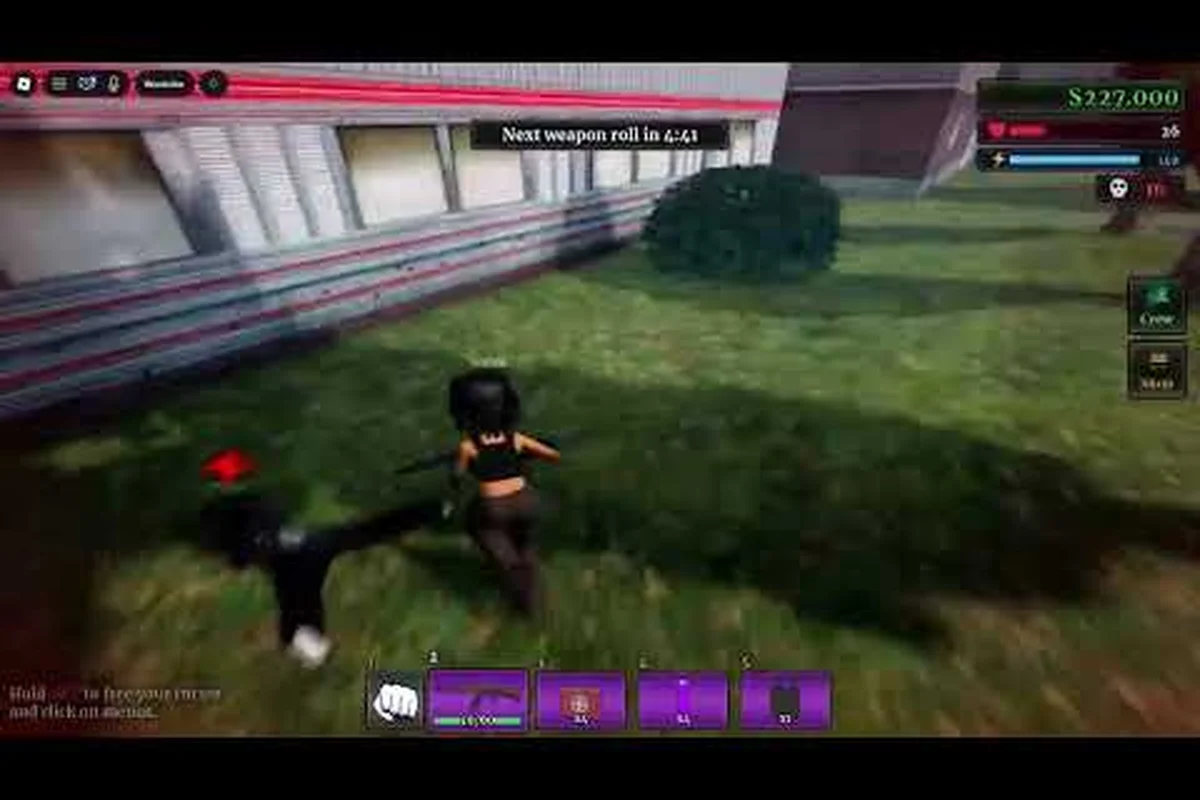
The urban reload creator story matters because a competitive shooter's direction often depends on who communicates updates, collects feedback, and decides what reaches the live game. This guide introduces the creator behind Squad Labs, traces the game's development history, and shows which official channels players can trust for verified news.
The Urban Reload Creator and Squad Labs
The urban reload creator is Suitchi7, whose work with Squad Labs connects the game’s development, public updates, and player community. This matters because Urban Reload is shaped by both studio decisions and community feedback; understanding who is behind the project clarifies how ideas, patches, and announcements move from development into the live game.
That connection is especially visible in the game’s communication channels, where players can follow development, discuss balance, and report problems. To get the latest reliable picture, begin with official announcements and established community spaces rather than relying on reposts without context.
| Key Figure | Role | Best Source for Updates |
|---|---|---|
| Suitchi7 | Lead public-facing creator associated with Squad Labs | Official game channels |
| Squad Labs | Studio team behind Urban Reload | Official announcements and developer posts |
| Players | Testers, feedback providers, and community builders | Discord and other official spaces |
| Creators | Producers of movement, combat, and server showcases | YouTube and approved social channels |
This article focuses on the urban reload creator behind the project, the development history surrounding Squad Labs, and the channels that connect developers with players. It also explains how the community can evaluate announcements without confusing unofficial commentary for official news.
Suitchi7’s Role in the Urban Reload Creator Story
Suitchi7 is closely associated with the urban reload creator identity and the Squad Labs development effort. In practical terms, that means communicating around the game’s development, sharing updates, helping players understand changes, and maintaining a visible connection between the studio and its audience. The creator role matters because development decisions become meaningful to players when people can explain their purpose and receive feedback in return.
Urban Reload’s creator story is also a story about small teams working in public. Rather than presenting development as a sealed process, Suitchi7 helps create visible channels where changes, questions, and player reports can meet. That transparency is especially valuable in a competitive Roblox experience where movement, weapons, and server behavior can quickly shape the meta.
| Responsibility | What It Means for Players | Practical Example |
|---|---|---|
| Sharing development news | Players learn what is changing and why | A post explaining a movement or weapon adjustment |
| Relaying community feedback | Player concerns reach the team | Reports about difficult encounters or unclear mechanics |
| Explaining decisions | Changes become easier to interpret | Context for a balance patch |
| Building relationships | The community feels involved in development | Ongoing conversations through official channels |
| Directing attention | Players know where verified news appears | Announcements hosted in the official game hub |
The best way to interpret this role is not as a single person handling every part of development. Squad Labs includes a broader team whose responsibilities may include coding, design, testing, art, and live operations. Suitchi7’s public connection adds the communication layer that helps players understand the work and gives community members a recognizable point of contact.
The distinction between official information and community interpretation is crucial. Player experience is valuable for spotting friction, but a personal video, social post, or Discord message does not automatically represent a future patch. Community reports can support development priorities when they are consistent, reproducible, and shared through the proper channels.
Urban Reload History Through Squad Labs Development
The urban reload history is best understood as a cycle of building, testing, listening, and refining. Squad Labs develops Urban Reload on Roblox, where the platform allows rapid feedback and direct access to players. That environment rewards frequent iteration, but it also makes clear communication important because mechanics can change while a community is still learning how to use them.
A useful timeline separates confirmed development milestones from community memory. The Urban Reload launch overview provides a focused starting point for release and game overview information, while the broader creator story explains how the project continued to evolve after players encountered the live experience.
| Phase | Developer Focus | Community Role |
|---|---|---|
| Concept and prototype | Establish movement, combat, and server structure | Test clarity and identify early friction |
| Public release | Make core systems understandable to a wider player base | Report bugs, share tactics, and establish expectations |
| Early refinement | Tune weapons, encounters, progression, and performance | Provide structured feedback on specific scenarios |
| Ongoing updates | Expand content and adjust systems based on results | Validate changes and report new issues |
| Community growth | Build shared knowledge around strategies and updates | Create guides, videos, discussions, and events |
This development cycle explains why the urban reload community can influence the game without directly controlling every decision. Player feedback carries the most weight when it demonstrates a repeated problem, explains the conditions required to reproduce it, and identifies which part of the experience is affected.
The developer update overview is especially useful when separating official announcements from later community analysis. It helps readers connect patches to the original message and see whether a stated goal was met in practice, which is a more reliable method than judging a change from its title alone.
Why Patch Context Matters
Updates should be read as part of a sequence, not in isolation. A weapon adjustment may accompany a movement change, server improvement, or reward adjustment. Likewise, a bug fix can reveal how a mechanic was intended to function. Checking recent notes prevents players from treating an older guide as permanent and mistaking a temporary balance state for the final design.
| Context Check | Why It Matters | Best Practice |
|---|---|---|
| Release date | Older advice may describe outdated systems | Check the current game version before following a guide |
| Patch notes | Balance changes can alter rankings | Compare guides published before and after an update |
| Platform behavior | Roblox clients may load differently | Test the reported problem on a current client |
| Source of claim | Official posts carry more authority | Compare announcements with player reports |
| Reproduction details | Clear cases accelerate fixes | Record the map, loadout, action, and outcome |
Understanding the urban reload history also requires separating release chronology from community memory. Players may remember an older version more vividly because it shaped their favorite strategies. That memory can still be valuable, but it should be labeled as a historical experience whenever the current game differs.
How the Urban Reload Community Influences Development
The urban reload community is not merely an audience; it is a working network of testers, players, creators, and moderators. Its strongest contributions come from structured observation. A vague complaint can be difficult to act on, while a report that identifies the exact weapon, enemy behavior, movement condition, and expected result gives the team a practical starting point.
Community influence works best through a clear sequence. Players document what happened, developers evaluate whether it reflects a wider issue, and the live game changes when a fix or redesign serves the overall experience. Not every request becomes a feature, but clear evidence helps the team separate valuable systemic problems from isolated preferences.
| Community Contribution | Concrete Example | Development Value |
|---|---|---|
| Bug reporting | A recurring collision prevents normal movement | Reveals a reproducible technical defect |
| Balance feedback | A weapon feels disproportionately strong in one situation | Identifies an interaction worth testing |
| Clarity feedback | Players misunderstand a control or objective | Supports clearer tutorials and interface cues |
| Content demand | Players repeatedly request a new mode or feature | Informs future planning |
| Content creation | Creators publish movement or combat demonstrations | Helps players learn advanced systems |
A strong report should describe the result before the interpretation. For example, “the controller sometimes catches on the edge after a jump” is more useful than “the collision is broken.” The first identifies observable behavior; the second assumes a cause. This distinction is especially valuable for community reports because it reduces wasted testing time.
Creators add another layer through demonstrations. A movement showcase may reveal how a route works, while a combat video can expose a weapon interaction that text explains poorly. The Movement on Urban Reload by Frizy illustrates how creator material can document advanced techniques, but such videos should be treated as demonstrations rather than authoritative patch notes.
Turning Player Reports Into Useful Evidence
Players can improve the quality of feedback by grouping similar observations, removing duplicates, and distinguishing new problems from known issues. The goal is not to build the longest possible complaint; it is to make the relevant behavior easy to verify. A concise sequence of steps, the expected outcome, and the actual outcome provides a solid foundation for development review.
The event rewards and update history reference can help confirm whether a change coincides with a limited event, reward, or broader update. That distinction matters because temporary events may alter priorities, while a permanent feature requires more careful balancing across the wider game.
Finding Verified Urban Reload Discord and Twitter Updates
Finding reliable urban reload discord and urban reload twitter information starts with one rule: trace announcements back to an official source. Social reposts and creator summaries are useful for discovery, but the studio’s game page, verified social profile, or official announcement channel should remain the authority when conflicting details appear.
Players searching for an urban reload discord should verify the invitation through the official Urban Reload page or an announcement that already links to the server. This avoids impostor servers and makes it easier to identify which messages come from moderators or developers. Within the server, roles and announcement channels often provide clearer signals than ordinary chat messages.
| Source | Best Use | Reliability Check |
|---|---|---|
| Official game page | Permanent links and current entry points | Confirm that the page links directly to the server |
| Official Discord | Announcements, reports, community conversations | Look for verified staff and announcement roles |
| Official Twitter | Fast notices and links to longer information | Confirm the account is linked by the game hub |
| YouTube creators | Demonstrations and community commentary | Check the title, creator, and visible game context |
| Player reposts | Early awareness and discussion | Return to the original announcement for confirmation |
Discord and Twitter serve different purposes. Discord is better suited to sustained, organized conversations because announcement channels can preserve details and staff can respond in threaded discussion. Twitter is faster for short notices, patch links, and reminders, but a brief social post may omit implementation context. Checking the linked notes or in-game change prevents confusion when a summary and the full announcement differ.
The urban reload twitter reference should be treated as a notification service rather than the sole archive. Players who rely on one platform can miss a correction posted elsewhere, especially when servers, schedules, or reward windows change. Following both official social and in-game communication creates a more dependable update routine.
A Simple Verification Routine
Before treating a post as official, check whether it identifies the game, uses a verified or linked account, and points to an official destination. Then compare the date with the current version of the game. Old clips may still be relevant to the urban reload history, but they should not describe a live feature as if it is newly added.
| Step | Action | Result |
|---|---|---|
| 1 | Find the message from an official profile or verified channel | Establishes source authority |
| 2 | Open the linked announcement or game hub | Confirms the full context |
| 3 | Compare the date with recent patch notes | Separates current news from history |
| 4 | Look for platform or version qualifiers | Identifies possible exceptions |
| 5 | Save relevant details in a personal update log | Prevents reliance on reposted summaries |
This routine is especially helpful when several community accounts publish the same claim on the same day. A single accurate original can support many summaries, while a repeated error can travel just as quickly. Always open the original before repeating a development rumor.
Following Squad Labs Announcements and Future Changes
Following Squad Labs announcements gives players a direct way to track development without depending on reaction videos or speculative posts. The urban reload creator role becomes more useful when communication is treated as a sequence of sources: a brief social notice can lead to a detailed post, and player feedback can then shape what appears in the next revision.
Announcements are most valuable when read for intent as well as content. A line about improving movement may refer to input responsiveness, obstacle navigation, or a particular ability, so players should test the relevant area before assuming the entire movement system has changed. Likewise, a reward adjustment may affect event planning without changing core combat.
| Announcement Detail | What to Check | Why It Matters |
|---|---|---|
| Feature goal | The problem the change is meant to solve | Shows the intended player benefit |
| Affected modes | Whether the change applies to every server type | Prevents overgeneralization |
| Timing | Release date, test window, or event duration | Supports accurate planning |
| Known limitations | Bugs, exclusions, or tuning still under review | Sets realistic expectations |
| Feedback method | Where issues should be reported | Converts testing into useful evidence |
Players who want a forward-looking view can consult the future updates reference. It should be treated as a tracker for official plans rather than a promise of features that have not been confirmed. Plans can change as testing exposes balance issues, technical constraints, or dependencies between systems.
Evaluating Community Reactions
Large reactions do not automatically indicate that a patch is objectively good or bad. Popular comments can reflect the size of an affected group, the novelty of a change, or differences in play style. Reading the underlying experience produces a better assessment than counting positive and negative posts.
A balanced evaluation can use four questions:
-
Does the announcement explain a specific player-facing problem?
-
Can players reproduce the original issue reliably?
-
Do post-change tests show progress without creating a larger problem?
-
Is the creator transparent about known limitations or future tuning?
These questions also help separate a design disagreement from a technical defect. Players may prefer one weapon or movement style, but a bug is established when the game behaves differently from its intended rules. The gun ranking reference is best consulted after checking patch dates because rankings can shift after balance adjustments.
Practical Ways to Track the Urban Reload Creator’s Work
Tracking the urban reload creator’s work is easiest when each channel has a defined role. Social channels provide speed, Discord provides depth, the game hub provides stable links, and creator videos demonstrate specific mechanics. Treating them as complementary sources produces a clearer picture than waiting for every detail in one place.
Begin by enabling announcements from the official social profile and verifying the Discord server through the game’s official page. Next, save links to developer posts that explain major updates. Community members can then use those primary sources as the foundation for their own discussions instead of building every conversation on unverified reposts.
| Tracking Habit | Practical Action | Result |
|---|---|---|
| Verify before sharing | Open the original announcement | Reduces rumor propagation |
| Record the date | Note when a change went live | Keeps historical advice clear |
| Separate channels | Use social for alerts and Discord for discussion | Maintains a useful information hierarchy |
| Test narrowly | Reproduce one reported issue at a time | Produces better evidence |
| Revisit rankings | Check weapon guides after balance changes | Avoids stale advice |
| Watch official media | Review creator demonstrations for context | Supports visual learning |
A lightweight update log can contain only four fields: the announcement date, affected system, official link, and personal test result. That is enough to build a useful timeline of the urban reload history without copying large amounts of official text. It also makes it easier to determine whether a repeated problem was actually fixed.
Players should also separate observation from speculation. Observation might be that an enemy behaves differently after taking damage; speculation might be that the developer intends to remove the enemy. The first can be tested and reported. The second becomes meaningful only after an official statement supports it. Strong community communication depends on that distinction.
A Weekly Review Routine
A short weekly review keeps community knowledge current without requiring constant monitoring. First, review official announcements and compare them with recent patch notes. Next, check whether a reported issue has been addressed in-game. Finally, review community discussions for recurring problems and add any confirmed information to the personal log.
| Review Point | Question to Answer |
|---|---|
| Announcements | Which systems received a documented change? |
| Patch notes | Does the implemented behavior match the announced goal? |
| Community reports | Which issues appear across multiple independent examples? |
| Creator videos | Which techniques or explanations require verification? |
| Guides | Which rankings or advice may now be outdated? |
This routine makes the creator relationship more useful for players who want deeper technical understanding. Instead of merely receiving news, they can compare the purpose of a change, test the result, and contribute evidence when behavior differs from the stated goal.
Frequently Asked Questions
Who is the urban reload creator associated with Squad Labs?
Suitchi7 is the creator most closely associated with Squad Labs and the game’s public development communication. The role includes presenting updates, explaining project direction, and helping connect players with the studio. Squad Labs is the broader development team, so creator work should not be interpreted as a one-person operation.
What is the best way to follow Urban Reload development news?
Start with the official Urban Reload game page and the studio’s verified social profile, then use the linked Discord for longer discussions. Social posts are useful for quick alerts, while official announcements provide more context. Check dates and patch notes before treating an older creator video as a description of the current game.
Does the urban reload community directly decide what gets updated?
Players can influence development by reporting reproducible problems, explaining unclear systems, testing changes, and highlighting recurring balance issues. The studio still evaluates priorities and makes final design decisions. A structured report with exact conditions is generally more actionable than repeated general feedback, especially when other players can confirm the same behavior.
Is an Urban Reload Discord message always an official announcement?
No. Ordinary chat, player questions, and personal opinions may appear in the same server as official news. Look for announcement channels, staff roles, pinned messages, and links that return to the official game hub. This verification step helps distinguish current developer information from community discussion or an outdated repost.
Why should players record the urban reload history of major updates?
A dated record helps connect developer intent, community reaction, and the behavior players experienced after each change. It also prevents older rankings or movement advice from being mistaken for current information. A simple log with dates, official links, affected systems, and test results is enough to build a clear and useful timeline.
The urban reload creator story is ultimately about a practical partnership between Squad Labs, Suitchi7, and the urban reload community. Official channels provide direction, player reports supply evidence, and creators help explain the game in action. By tracing updates to their verified source and checking them against current play, readers can understand the urban reload history without mistaking community discussion for a guaranteed roadmap.