
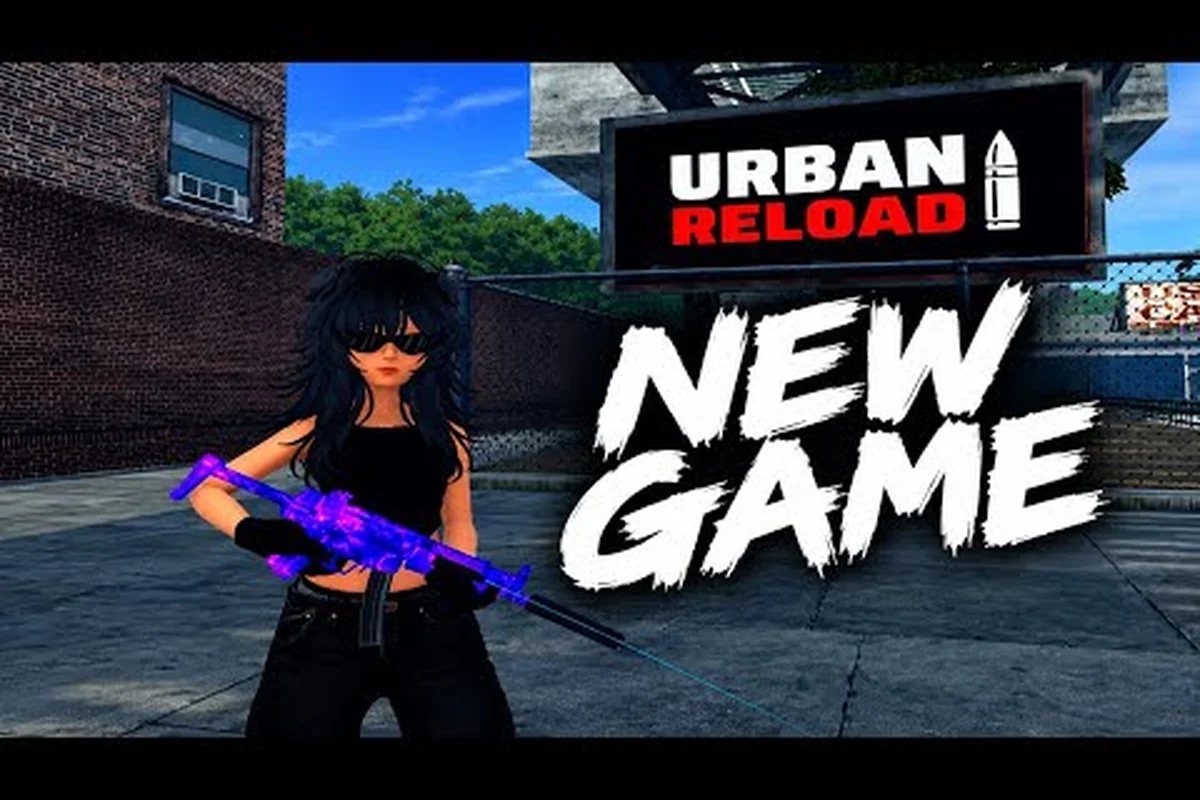
The urban reload first hour matters because early decisions determine whether you build steadily or enter every match behind. Use this guide to choose a practical starting loadout, protect scarce gear, and turn your next few rounds into a stronger foundation.
Urban Reload is a free-to-play, open-world shooter built around looting, quick movement, and high-risk encounters. Its progression can feel unpredictable because the most valuable gear is usually found somewhere you must survive long enough to reach. That makes the opening minutes less about grabbing every shiny item and more about building a dependable routine that works across different situations.
This guide focuses on the urban reload first hour, including the safest way to learn the map, which items deserve space in an early backpack, and how to make every extraction count. The advice is designed for new players who want a practical First-Hour Routine rather than a long list of disconnected tips.
Urban Reload First Hour Survival Priorities
The best urban reload what to do first routine is simple: establish a route, secure a working weapon, and leave before a good fight turns bad. A clean route matters more than speed because repeated losses can leave you searching for replacements while another player is already equipped with the gear you need.
Build a Three-Part Opening Routine
A dependable opening consists of three stages: orient, equip, and extract. Skipping any stage creates avoidable problems, such as carrying a powerful weapon with no healing, exploring the most dangerous district first, or staying after the loot value has already peaked.
| Opening Stage | Primary Goal | What to Watch | Exit Condition |
|---|---|---|---|
| Orient | Learn nearby routes and threats | Safe exits, landmarks, visible players | You know two ways out |
| Equip | Build a functional kit | Ammunition, healing, usable weapon | You can handle a short fight |
| Extract | Convert finds into retained gear | Inventory weight, time, enemy pressure | You have a clean route home |
During the orient stage, walk the perimeter of a location before entering its center. Look for corners, windows, rooftops, and other routes that could trap you. This is especially important because a corridor that feels safe on the way in can become a death trap after someone else enters.
The equip stage should follow a priority system: functional weapon, ammunition, healing, valuables. A common mistake is treating a rare item as more important than a basic healing option. Rare loot has little value if you cannot survive the walk back from it.
Protect the First Successful Loot Run
Once you possess a usable setup, do not turn every opportunity into a maximum-value run. The early goal is repeatable efficiency, not one spectacular haul. Complete a modest route, bank the useful equipment, and return with more than you started with.
That approach also makes the early hour easier to learn. If you always overextend, you will not know whether a failed run came from bad timing, dangerous routing, or simply taking on a stronger opponent. A controlled first extraction gives you a clear baseline for later improvement.
Urban Reload Starting Loadout Decisions
A reliable urban reload starting loadout should work before it looks impressive. Start with equipment that covers three jobs: damage, recovery, and mobility. Rare equipment can wait until you understand how inventory space, threat levels, and extraction routes affect your run.
Choose a Balanced Starting Kit
The exact weapon names and item availability can vary by platform or game version, so build around roles rather than forcing a specific shopping list. The goal is to retain enough mobility and healing to handle an ordinary encounter without needing perfect aim or unlimited ammunition.
| Loadout Slot | Early Role | Why It Matters | Upgrade Priority |
|---|---|---|---|
| Weapon | Reliable damage | Wins short encounters and discourages attackers | Medium |
| Ammunition | Repeatable shots | Reduces dependence on long-range encounters | High |
| Healing | Recover after contact | Prevents one mistake from ending the run | High |
| Inventory Space | Carry potential loot | Preserves value without slowing movement | Medium |
| Mobility Tool | Escape pressure | Creates space between you and stronger opponents | High |
Begin with a modest amount of cash and purchase replacements rather than emptying your entire balance on a premium weapon. This method provides cash buffer for a poor match. If your weapon breaks, disappears, or gets lost after death, you can still recover instead of starting again with nothing.
Keep a Backup Bag
The first hour is one of the best times to establish a Backup Loadout because later sessions may involve more valuable equipment. Keep one basic weapon, ammunition, and a small amount of healing separate from your main kit whenever possible.
A backup kit protects against several common problems: depleted magazine capacity, limited healing reserves, and overloaded inventory. For example, if your primary weapon runs dry, a sidearm can provide emergency damage while you search for compatible ammunition. Pack the backup weapon with only the ammunition it can actually fire; carrying extra magazines for several calibers reduces usable slots and adds unnecessary weight. Similarly, keep one healing item accessible rather than burying it beneath valuables. This separation lets you respond to an early ambush without abandoning your main kit or searching through an already full backpack.
-
Your primary weapon runs empty and nearby loot offers no suitable ammunition.
-
A fight damages you after you have already used most of your healing supplies.
-
Your inventory fills with valuables, making it dangerous to return through exposed streets.
-
A defeat leaves you with little cash and no organized recovery plan.
If the game presents backpack upgrades, compare them by usable space, carry weight, and protection, rather than assuming the largest option is always best. A bag that keeps you mobile can be more valuable than one that holds extra items but leaves you trapped.
Decide When to Upgrade
Upgrade when a new item solves a weakness that you repeatedly encounter. Do not upgrade simply because an item appears more expensive or impressive. A rifle may be excellent at range, but it is not automatically better for a cramped route if its handling leaves you vulnerable.
| Upgrade Reason | Worth It? | Example Situation | Better Choice |
|---|---|---|---|
| Current weapon cannot defeat common opponents | Yes | Repeated damage losses | Improve primary weapon |
| Ammunition is too scarce | Yes | Several missed encounters | Carry more usable ammo |
| Healing is unreliable | Usually | One mistake ends most runs | Add basic healing |
| Bag capacity causes constant trips | Sometimes | You leave loot behind | Small capacity increase |
| Fancy item has no clear advantage | Not yet | Early cosmetic or role overlap | Save cash |
The best early purchase solves a repeatable problem. If you are already winning most short fights with your current primary weapon, preserve cash instead of chasing a more powerful setup that you may not use well. During the first hour of an Urban Reload run, prioritize practical upgrades that improve survivability in repeated encounters: usable ammunition, basic healing, or enough bag capacity to avoid leaving valuable loot behind. For example, if your current weapon already clears close-range opponents but you keep losing fights because ammunition runs out, buying more usable ammo is a stronger choice than replacing a serviceable gun with a more expensive rifle. If healing is the recurring bottleneck, carry a basic healing item; if the bag causes constant trips, make a small capacity increase. Save the cash when the upgrade has no clear advantage.
Urban Reload Game Modes and Your Opening Route
Different urban reload game modes can reward different habits, but the first-hour basics remain consistent: learn the landscape, acquire enough supplies to survive, and avoid assuming that visible loot is worth every risk. The mode changes the rhythm, not the need for sound fundamentals.
Match Structure Changes Your Priorities
Some matches emphasize broader movement and longer routes, while others pressure you into localized encounters. In the first hour, use spawn-side cover to establish sight lines, then choose between a wide-open rotation and a dense-district loop based on player spacing and gunfire. Treat detailed mode specifications as changeable, so treat the table below as a practical framework rather than a fixed rule list; for example, if a squad is converging on one district, a longer route may preserve loot access better than pushing directly through the contest.
| Match Situation | Early Priority | Route Style | Main Mistake |
|---|---|---|---|
| Wide open area | Cover and sight lines | Use edges and hard cover | Crossing exposed ground directly |
| Dense district | Escape routes | Loop around danger | Entering through one corridor |
| High-value location | Value versus contest | Scout from two sides | Ignoring other players nearby |
| Low-pressure area | Efficient gathering | Short predictable route | Overstaying after collecting |
Read the match through its signs instead of relying on a label. Are players spread out, or converging on the same district? Is loot being picked up quickly? Are shots occurring near your intended route? These observations reveal whether you should gather more cautiously or move toward a less contested area.
The mobile guide to Urban Reload is useful if you also play on a phone or need a more compact setup for short sessions. Its settings and game-mode overview can complement this guide, especially when display clarity and audio awareness affect your opening decisions.
Use Sound as Route Information
Footsteps, distant gunfire, and other nearby sounds can warn you that a route is occupied. The footsteps and audio guide explains why audio awareness belongs in a survival plan: hearing an approach gives you time to change direction before it becomes a close-range surprise.
Audio should alter your behavior, not create unrealistic confidence. If you hear movement on one side, wait briefly, take an alternate route, or locate a safer exit. Your goal is to preserve optionality. A player who can leave a street easily is harder to trap than someone committed to the center of it.
Use Short Test Routes
During the urban reload first hour, test a route with one practical objective. For example, gather ammunition and leave, or enter a building, take one item, and withdraw. A short route reduces wasted time and teaches you how the area responds to pressure.
After each test, record three details: where enemy resistance appeared, which exit stayed usable, and how long the move took. For example, if a doorway becomes blocked after the first contact, mark it as a choke point and use the alternate exit on your next run. Tracking these results creates a route knowledge loop: each revisit shows which safe-room, window, or corner remains dependable under pressure, helping you improve movement during the urban reload first hour.
Urban Reload How to Survive Early Encounters
Urban reload how to survive advice should focus on decisions that are available to beginners. You do not need perfect reactions to avoid every mistake. You need clear priorities that keep a small error from turning into a total loss.
Break Encounters Into Three Questions
When danger appears, ask these questions in order: Can I avoid it, can I win it quickly, and can I escape from it? This sequence prevents pride from overriding survival. Avoiding a fight preserves equipment; winning quickly prevents reinforcements or unexpected opponents from joining; escaping keeps your resources intact.
| Priority | Best Response | Why It Works | Result |
|---|---|---|---|
| Avoid | Change route or delay | Removes the danger before contact | No resource loss |
| Win quickly | Use clear cover and controlled bursts | Limits exposure and engagement time | Quick resolution |
| Escape | Use distance, routes, and mobility | Reduces the opponent’s advantage | Gear retained |
Do not begin every confrontation because another player is visible; in an urban reload first hour, visibility is information, not an invitation. If the player is crossing a narrow street or holding a doorway, a quick detour to a side alley can preserve your starting loadout and avoid a costly exchange. For example, spotting an opponent near a loot route may be better handled by waiting for them to pass, then taking an alternate route rather than firing immediately. The cautious route can take longer, but it often creates more earning opportunities across several matches by keeping your resources—and your ability to respond to the next encounter—intact.
Preserve an Escape Option
When you enter a building or loot location, identify two escape options before searching. One may be the door you used, while the other could be a window, side passage, rooftop connection, or nearby alley. The exact map features should be confirmed in-game because urban Reload’s layouts can evolve.
Keep one option open as long as possible. If you explore with every exit behind you, a single opponent can dictate the encounter and force you into a bad engagement. Good positioning gives you the ability to choose between fighting and leaving.
Use Disengagement as a Valid Result
Walking away from a fight is often the strongest play when you have less equipment or a weaker weapon. The competitive survival and risk guide expands on how to judge whether an encounter is worth taking, which is especially important before your gear is fully developed.
A practical threshold is to disengage when you lack ammunition, have no healing, entered a restricted space, or cannot identify another route out. These are measurable signs that the encounter has become less favorable. Confidence grows when you stop treating retreat as failure and start treating it as resource management.
Build From the Match You Just Finished
After each match, perform a short recovery routine. Keep the most useful supplies, repair or replace critical equipment, and adjust one detail for the next run. This creates compounding loadout progress rather than restarting with the same mistakes every time.
| Action | Immediate Benefit | Best Time |
|---|---|---|
| Secure essential items | Prevents avoidable losses | Immediately after extraction |
| Review the route | Identifies repeated danger | End of match |
| Repair equipment | Reduces future failure risk | Before entering another match |
| Improve one slot | Keeps spending focused | When funds allow |
| Rest after a rough run | Reduces rushed decisions | When fatigue affects play |
The fast cash guide becomes useful only after your first-hour loadout can support a repeatable route. For example, prioritize a starting setup that covers ammunition, armor, and healing before chasing high-value urban loot; if one essential slot is weak, a profitable run can still end in a failed extraction. Once that loop is reliable, use the fast cash route to fund one targeted slot upgrade at a time rather than spreading resources across every category.
First-Hour Match Checklist
A checklist works best when it captures decisions rather than buttons. Use the same sequence on every match, then adjust only after you identify a recurring weakness. This consistency prevents a bad opening from turning into an impulsive spending spree.
Before the Match Begins
Spend only enough to solve a clear equipment shortage. Carry a reliable weapon, usable ammunition, healing, and room for at least one valuable find. If your current setup can win short encounters, delay expensive upgrades until you understand which risk causes most of your losses.
During the Match
Scout first, loot second, and keep an exit available. Take nearby supplies before crossing exposed ground, and pause when other activity makes a route unsafe. The First-Hour Rule is to preserve enough gear to complete another round, because one bad encounter should not erase all progress.
After the Match
Extract with a viable kit whenever possible. If you lose equipment, record the reason: poor route, unopened exit, insufficient ammunition, or an avoidable fight. Then change one part of your routine. The risk-versus-reward guide offers a useful framework for judging whether the next objective is worth its exposure.
| Checkpoint | Question to Ask | Desired Answer |
|---|---|---|
| Loadout | Can this kit handle a short fight? | Yes |
| Route | Do I have more than one way out? | Yes |
| Inventory | Is there room for useful loot? | Yes |
| Combat | Am I engaging from a sound position? | Yes |
| Exit | Am I leaving while value remains safe? | Yes |
| Recovery | Do I know what caused the loss? | Yes |
Urban Reload First Hour Progression Plan
Your first hour should end with better routines, not necessarily rare equipment. Complete three stable extraction loops, improve one weak loadout slot after each loop, and note the situations that cause you to lose. This plan creates measurable progress without requiring a perfect match.
Use cash carefully. Each purchase should support a specific goal, such as surviving ammunition shortages or returning from a contested area. When the same problem appears three times, upgrade that part of the setup. Otherwise, save for a larger improvement rather than spreading your resources too thin.
Track these five results after every session, comparing each run with your previous three rather than relying on one unusually successful match. If safe extraction falls while value retained rises, prioritize route timing and contested-area positioning; if survival improves but retained gear drops, adjust your starting loadout and loot discipline. For example, extract before the 60-minute mark rather than forcing a fourth loop when ammunition is already depleted. This creates a clear diagnostic for each urban reload first hour and shows which upgrade will produce the greatest benefit next.
-
Survival rate: the percentage of matches in which you reach a safe extraction.
-
Value retained: the useful equipment you bring home relative to the equipment you collect.
-
Average route length: whether you are spending more time traveling than finding useful items.
-
Encounter outcome: how often you win, escape, or lose because of positioning.
-
Cash efficiency: whether purchases solve a recurring problem or remain unused.
| Time Block | Main Goal | Recommended Action |
|---|---|---|
| Minutes 1–10 | Learn the area | Scout two routes and identify exits |
| Minutes 10–25 | Establish a kit | Secure weapon, ammunition, and healing |
| Minutes 25–40 | Complete one clean loop | Gather value and extract |
| Minutes 40–60 | Stabilize the loadout | Adjust one recurring weakness |
| Final Minutes | Bank the session | Retain resources and review results |
By the end of the urban reload first hour, your goal is a repeatable loop that produces retained gear and teaches you how the map behaves under pressure. That foundation makes later farming, loadout expansion, and PvP preparation much easier because you are no longer treating every match as an improvised scramble.
Frequently Asked Questions
What should I do first in Urban Reload?
Begin by learning one small area, then secure a working weapon, ammunition, and healing before searching for high-value loot. Prioritize two reliable escape routes and complete one clean extraction loop. The goal during the urban reload first hour is repeatability, not maximizing the value of every item you see.
What is the best starting loadout for a new player?
A balanced starting loadout needs a reliable weapon, enough ammunition for several short engagements, basic healing, and usable inventory space. Keep a backup bag with emergency supplies when possible. Delay expensive upgrades until repeated losses show a specific weakness that the current equipment cannot fix.
Should new players fight other players immediately?
Not always. Avoiding a dangerous encounter can be better than entering it with weak gear, because a defeat may cost both equipment and time. Fight when you have cover, ammunition, healing, and a quick way to escape. Otherwise, change routes and preserve the resources you already collected.
How do I survive early Urban Reload matches?
Scout locations from the outside, avoid obvious crossings, and keep an exit open while looting. Disengage when ammunition runs low, healing disappears, or you enter a confined space without another route. The safest early match is often one in which you avoid unnecessary fights and return with useful gear intact.
Which Urban Reload game mode is best for beginners?
Choose the mode that lets you move steadily, learn the map, and avoid being eliminated before gathering a full loadout. Match rules can vary by platform and update, so compare objectives, time limits, and spawn areas in-game. A forgiving route and clear extraction goal are more valuable than a mode label alone.