
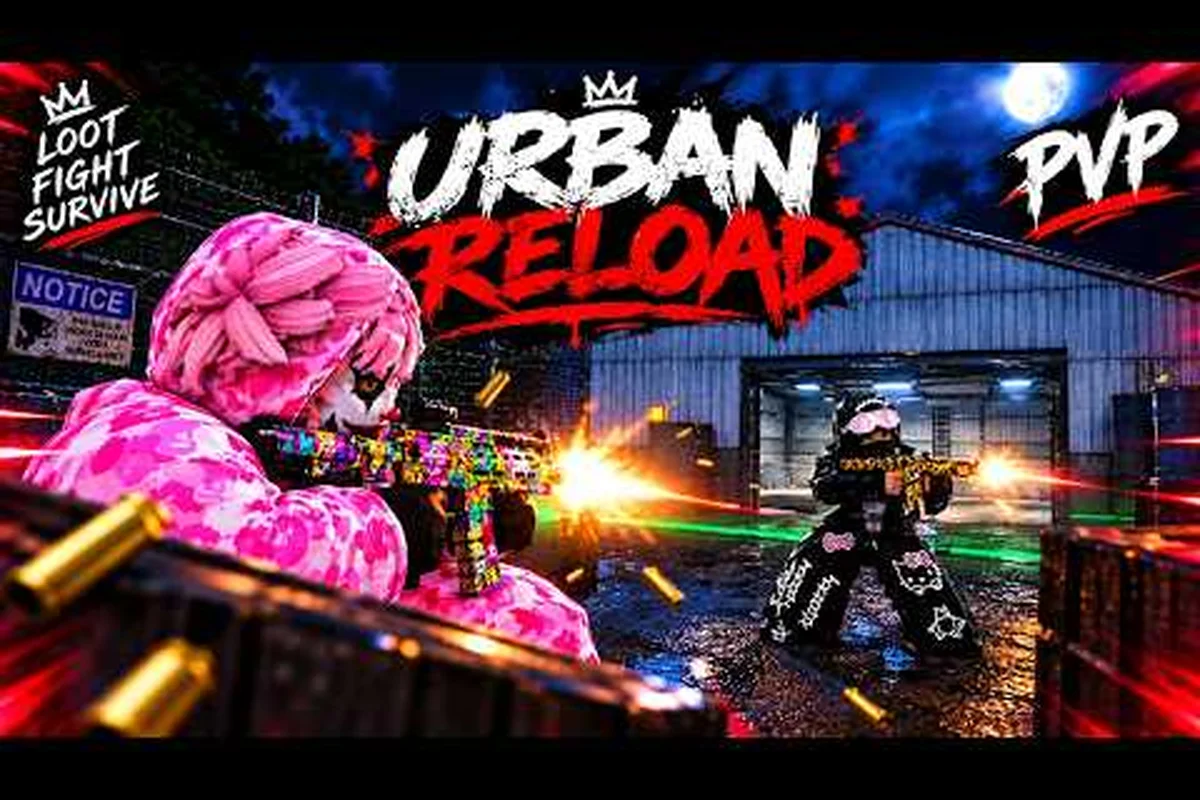
Urban Reload PvP rewards deliberate crosshair placement, smart movement, and rapid target recognition. This guide turns those fundamentals into a repeatable gunfight routine that helps you create cleaner aim opportunities and finish encounters with greater consistency. The key is to treat each engagement as a sequence: use cover to stabilize your crosshair, track the opponent’s head-level movement, and time bursts for when they break the sightline. In practice, a short burst at the head after a strafe can produce a faster headshot than holding fire at the chest, while pre-aiming the next corner reduces the time needed to reacquire. Mastery comes from linking these small positioning and aiming decisions into one fluid response.
Urban Reload PvP Fundamentals for Cleaner Gunfights
Urban Reload PvP becomes more effective when every movement has a purpose. Instead of chasing an opponent across open ground, you want to reduce the distance, protect your aim, and force a favorable exchange. This matters because even accurate first shots become unreliable when the target is moving quickly, partially concealed, or firing from an unexpected angle.
A strong Urban Reload combat guide begins with three layers: visual control, positioning, and follow-up decisions. Visual control keeps your crosshair near likely enemy positions, positioning makes your aim less vulnerable, and follow-up decisions determine whether you press the advantage or disengage. Mastery comes from connecting those layers under pressure rather than memorizing isolated tricks.
| Gunfight principle | Common mistake | Better response |
|---|---|---|
| Crosshair placement | Looking at the floor while running | Keep the reticle near head height and in the direction of travel |
| Target priority | Firing at the nearest visible body | Identify the opponent who can threaten you fastest |
| Positioning | Standing in an open doorway | Use an angle, cover point, or short movement route |
| Follow-up | Missing once and immediately sprinting | Stabilize, reacquire, and fire a controlled second attempt |
| Engagement distance | Walking toward every opponent | Close only when it improves your shooting angle |
Build a Reliable Engagement Loop
A repeatable loop prevents the panic that causes overshooting and blind movement. Begin by scanning the open space around your route. When you detect an opponent, identify where their upper body will appear, stop feeding your position directly toward them, and use a short strafe or cover edge to create a brief firing window.
This loop is especially useful in close-quarters maps, where enemies appear for only a fraction of a second. Pre-aimed corners reduce reaction time, angle ownership makes you harder to challenge, and short corrections help preserve accuracy. If your aim drifts or your opponent breaks line of sight, reset rather than chase blindly.
Loadouts Should Support Your Fight Style
Weapon familiarity matters more than a complicated loadout. Practice the time needed to raise, aim, fire, and recover with your preferred weapon until those actions become consistent. This urban reload aiming guide approach also makes it easier to identify whether a missed shot came from poor aim, an awkward angle, or excessive movement.
| Combat need | Practical loadout idea | Reason |
|---|---|---|
| Close-range pressure | Fast-firing primary weapon | Creates a short window before the opponent can respond |
| Medium-range accuracy | Stable primary weapon | Encourages controlled follow-up shots |
| Flexible movement | Light primary plus sidearm | Provides a backup when reloading or repositioning |
| Player versus player variety | One primary and one familiar sidearm | Avoids spending every match relearning unfamiliar controls |
For broader weapon handling and situational choices, review the Urban Reload urban combat tactics guide. It expands on the table above by explaining when to break line of sight, how to use cover during a reload, and when switching from a primary to a sidearm creates a better recovery window. Apply that guidance in practice by recording each gunfight’s range, chosen weapon, reload timing, and outcome, then adjust the loadout when a weapon repeatedly wins at the wrong distance or leaves you exposed while reloading.
Improve Your Aim Without Changing Everything
Improving in Urban Reload does not require replacing your sensitivity, buying equipment, or spending every session in one drill. Small corrections are easier to retain, especially when they address a specific fault such as aiming low, tracking too slowly, or firing before the target stabilizes.
Begin with a visual audit. Record or review a short session and note where the crosshair rests while moving, whether it jumps upward before firing, and whether you pull the trigger during the opponent’s strafe. These details reveal whether your main problem is aim placement, tracking, or decision timing.
Use a Three-Stage Aiming Routine
The three-stage routine divides practice into skills that can be evaluated separately: first, lock the reticle onto a stationary target’s head or upper chest; second, maintain a short tracking path while the target strafes; third, recognize a predictable firing window during the exchange. This sequence matters because a poor initial placement forces larger crosshair corrections, making smooth tracking and accurate Urban Reload gunfight decisions harder to isolate.
| Stage | Training focus | Success marker |
|---|---|---|
| Placement | Put the crosshair on a stationary target | The reticle begins at head or upper-chest height |
| Tracking | Follow a moving target smoothly | The reticle stays close without constant corrections |
| Decision | Choose when to fire during a strafing exchange | Shots occur when the target’s path is predictable |
Start with placement because tracking becomes difficult when the reticle is already pointed at the floor. Place the crosshair on the upper chest or head of a stationary target, then shift focus to smooth horizontal and vertical tracking. Finally, introduce side-to-side target movement and fire only when the reticle remains near the target instead of chasing every sudden change.
Diagnose Misses Instead of Brushing Them Off
Every miss contains information. If your shots land below the target, your crosshair was too low or your view dipped during recoil. If they land behind a moving opponent, your tracking lagged. If they land in front, you probably fired before the target completed a strafe.
| Miss pattern | Likely cause | Corrective drill |
|---|---|---|
| Consistently below target | Low crosshair placement | Hold the reticle at head height during movement |
| Wide to the side | Delayed tracking | Follow slow horizontal movement without firing |
| Shot lands before impact | Early trigger release | Wait for a brief stable tracking window |
| Sudden vertical jump | Recoil or mouse lift | Finish the burst with a controlled downward correction |
| Hit cover | Late target acquisition | Pre-aim likely entrances and corners |
For a broader look at fundamentals, the Urban Reload beginner guide can help with control setup and general game preparation before you focus on advanced exchanges. Use that foundation to stabilize sensitivity and recoil control, then diagnose missed shots by reviewing the miss-pattern table: consistently low hits suggest crosshair placement, while shots landing in front of a strafing opponent reveal an early trigger release. Correcting those specific causes prevents a recurring miss pattern from becoming a bad habit during Urban Reload PvP gunfights.
Winning Street Fights Through Positioning
Winning a gunfight is rarely about firing the first bullet. It is about controlling space, preserving your options, and choosing favorable engagements. These urban reload gunfight tips focus on actions you can apply immediately in solo and team encounters without inventing unsupported weapon stats or universal loadout claims.
The central rule is simple: movement should create a shooting opportunity, not merely make you harder to see. A lateral strafe gives you a brief angle, but endless jumping can destabilize your aim. Likewise, walking toward an opponent can be useful when it closes the distance, but stopping in an exposed lane often gives the defender a cleaner response.
Control Distance and Cover
Different situations call for different distances. A long lane favors the player who can maintain accurate aim, while a confined room rewards the player who reacts quickly. Instead of asking which approach is always best, ask which one leaves you with a usable firing lane.
| Situation | Risk | Useful response |
|---|---|---|
| Long open lane | Easy target for accurate fire | Break the sightline, use lateral movement, or seek cover |
| Narrow doorway | Predictable appearance for both players | Pre-aim slightly to the side and wait for a clear target |
| Open room | Poor escape routes if you miss | Keep your crosshair active and avoid standing still |
| Close-range duel | Limited reaction time | Shorten the distance deliberately while staying accurate |
| Low-health fight | One mistake may end the exchange | Break sight, reset aim, and avoid risky pushes |
Cover should be used in layers. Do not stop just because an obstacle blocks incoming fire; first confirm that the opponent cannot easily step to one side. Peeking from a new angle after a pause can be stronger than repeatedly hugging the same wall.
Control the Trigger, Not Just the Target
Firing continuously feels aggressive, but unnecessary shots can reveal your position and create long recovery periods. In many fights, one controlled burst followed by a brief pause gives a better result than emptying the entire magazine at an uncertain target.
Before you commit to a shot, judge the trigger by your sight picture and remaining ammo, not merely by the enemy’s location. A 30-round magazine may look safe, but Urban Reload’s close-range damage falloff means an early, accurate burst can win an exchange before recovery becomes necessary. Use 3–5 round bursts against an exposed opponent, then release the trigger and create enough distance to reset your aim. If the target disappears behind cover, keep the crosshair near the likely reappearance angle rather than firing blindly into the wall; this preserves accuracy and prevents muzzle placement from giving away your position.
-
Acquire: Put the reticle on the visible upper body.
-
Confirm: Check whether the target is exposed and your shot has a path.
-
Burst: Fire a controlled group while keeping the crosshair moving.
-
Reset: Release the trigger, reacquire, and decide whether another burst is worthwhile.
This sequence is especially helpful when an enemy crosses behind cover. Instead of continuing to fire at the last known position, stop firing and prepare for the reappearance angle; in an urban Reload PvP gunfight, a clean trigger reset prevents wasted recoil and makes the next burst more accurate. For example, if an opponent breaks right after a 4-round burst, hold your aim at the wall edge, wait for the upper body to clear it, then fire another short burst only if the sight picture is clear. This gives the second engagement a fresh starting point and turns a missed burst into a successful reset-and-reacquire sequence.
Use Audio and Position Cues
Sound can tell you what the crosshair cannot. Footsteps, reload sounds, and weapon fire can suggest whether an opponent is moving, stopping, or changing position. That information is especially useful when an enemy is temporarily hidden, but it should guide your preparation rather than become an excuse to stare at an empty corner.
Maintain a loose mental map of entrances, elevations, and nearby cover. When a sound indicates movement, turn toward the probable route while keeping the reticle ready at head height. If you sprint directly to the sound, you may enter a crossfire with no time to correct.
Winning Gunfights Through Positioning and Timing
Players often treat PvP improvement as an aiming problem, but many lost fights begin with a positional disadvantage. You cannot evaluate a weapon without knowing how much time the target has to react, how many escape routes you possess, and whether your body is visible before your crosshair is ready.
This urban reload combat guide uses positioning because it controls the quality of every aiming opportunity. An excellent shot through a narrow opening may be harder to land than a simple shot while both players stand in the open, despite looking more impressive on paper.
Claim an Angle Before Exposing Yourself
An angle is the space where your weapon can cover a predictable route. Instead of walking directly toward a doorway, stop beside it, aim into the room, and let your crosshair rest where an opponent’s head or chest is likely to enter. This creates a first-shot advantage without demanding impossible flick speed.
The approach works because your opponent must solve several problems at once. They must locate you, clear the doorway, adjust their aim, and react to the incoming shot. Your task is simpler: maintain the angle and react to their appearance. When possible, change angles after firing so the next encounter is less predictable.
Use Movement to Reframe the Fight
Repositioning is not the same as running without direction. After firing, move to a new lane while preserving a usable sightline. The goal is to force the opponent to reveal more of their body or to make them adjust their camera movement.
A useful sequence is shoot, break, reset. Shoot during the intended window, break line of sight to stop the opponent from tracking every correction, then reset for another attempt. This works especially well against aggressive pushers because it replaces a stationary exchange with a repeated test of the same angle.
Adapt to the Opponent’s Pattern
After several fights, notice patterns rather than isolated outcomes. Does the opponent always rush the first doorway? Do they favor a particular weapon? Do they lose accuracy after a missed burst? Adapt by changing your first angle, using more cover, or presenting a harder target when they expect a stationary duel.
| Opponent tendency | Countermeasure |
|---|---|
| Rushes the nearest opening | Hold a crosshair angle and fight only after they enter your lane |
| Camps one corridor | Flank or pressure with short, controlled movement |
| Fires long bursts | Break sight after your opening shot and reset |
| Tracks targets carefully | Change direction, use cover, and avoid predictable strafes |
| Retreats after damage | Preserve enough health to finish the encounter rather than overpursuing |
Patience should not become passivity. If a retreating opponent exposes a lane, capitalize immediately by repositioning to a firing angle with clear cover; if a long-burst enemy briefly breaks sight, use that reset to reload only when safely concealed and deny the easy re-peek. The table’s retreat countermeasure matters here: preserve enough health to finish the gunfight instead of overpursuing, but take initiative as soon as the opponent’s pattern creates a safe opening.
Headshot Practice for Realistic Combat Improvement
Headshots reward precision, but chasing them at every opportunity can make an otherwise strong fight worse. A headshot guide should teach when a head is exposed, when the upper body is the safer practical target, and when a clean body hit removes the opponent faster than a risky head attempt.
The primary lesson is that headshots are a by-product of disciplined aim placement. When the reticle naturally rests at head height, a stationary opponent becomes much easier to hit. Against a moving opponent, the upper chest may be the more reliable first target, followed by an upward adjustment when the head becomes available.
Learn When to Push the Headshot
Use three target categories to make better shot-selection decisions: a fully exposed opponent who is stationary, a moving opponent at medium range, and a target only partially visible behind cover. The priority should shift with each state: take the head when it is stable, aim upper chest when tracking strafing movement, and target the visible body area when cover blocks the head. This prevents speculative head shots, because a small hitbox is useful only when the target’s movement no longer adds tracking error.
| Target state | Recommended priority | Reason |
|---|---|---|
| Stationary and fully exposed | Head | The head offers a small, precise target with no immediate need to lead it |
| Strafing at medium distance | Upper chest or head when stable | A smaller target becomes difficult to track during rapid movement |
| Partially hidden | Visible body portion | The exposed area is more reliable than a speculative head shot |
| Close and jumping | Track the torso first | Vertical head movement can produce repeated misses |
| Reappearing from cover | Pre-aim head height | The opponent must enter the reticle’s prepared position |
A practical drill uses a short burst on the torso, then allows the crosshair to rise naturally as the target stops. Do not snap directly to the head after every shot. Small, controlled corrections are faster than large vertical movements, and they are easier to repeat under pressure.
Separate Accuracy from Speed
Speed matters in PvP, but an inaccurate fast shot is not an advantage. Measure each attempt by whether the crosshair reached the intended height before firing. If the reticle was still low, increase your placement discipline even if the overall encounter speed felt quick.
For the Urban Reload how to aim better approach, combine target practice with movement. Walk toward a wall while maintaining head-height placement, stop as if identifying an opponent, and fire only once the crosshair settles. This resembles the rhythm of entering a room rather than isolated stationary clicking.
A Repeatable Training Session for Better PvP
A useful practice session needs measurable tasks, short challenges, and a cooldown review. Random matches can expose you to opponents, but they do not automatically teach one skill. Use the same session structure so that every block has a clear purpose and every mistake produces a correction.
A 25-minute session can look like this: reserve the first 14 minutes for isolated aiming fundamentals, such as crosshair placement, stationary tracking, strafe tracking, and burst control, before spending the final 6 minutes applying those skills in PvP. The progression matters because a headshot attempt without steady tracking often turns into an inaccurate burst, so each drill should produce one measurable correction—such as stopping the recoil climb once the reticle reaches head height—rather than simply increasing kill count.
| Time | Activity | Purpose |
|---|---|---|
| 4 minutes | Crosshair placement | Keep the reticle at head height while walking |
| 5 minutes | Stationary tracking | Follow smooth target changes without firing |
| 5 minutes | Strafe tracking | Control the reticle during side-to-side movement |
| 5 minutes | Burst control | Fire controlled groups and stop when aim drifts |
| 6 minutes | PvP application | Apply placement, angles, and reset decisions in matches |
The final review should answer three questions. Did misses come primarily from low placement, delayed tracking, or poor engagement decisions? Did you expose yourself before obtaining a usable angle? Did you keep firing after the target disappeared? These answers determine the next session’s focus.
Measure Progress Without Chasing Loot
Results will fluctuate because weapon access, map familiarity, and opponents differ, so a single Urban Reload score cannot show whether your gunfight mechanics improved. Track repeatable details instead: early misses by distance, pre-aimed holds, reloads taken during peeks, and whether you won the first useful aim before an opponent reacted. For example, reducing early misses from five to three while keeping two pre-aimed holds shows a more relevant improvement than a lower match score; the latter could reflect easier opponents or better weapon access rather than sharper aim, movement, or fight timing.
For example, a session might contain five early misses, two useful pre-aimed holds, and one avoidable reload during a fight. The next session should prioritize the earliest recurring error. This creates a feedback-ranked practice queue, which is more useful than changing sensitivity, weapon, and routine after every difficult match.
Community resources can provide additional examples of real encounters. The Roblox Urban Reload Fast PvP community footage shows player-reported gunfight movement and timing, while the Ultimate Guide by MySpaceGuide offers a short community reference. Treat such examples as observation rather than official mechanical data, since community footage may not reflect every platform or update.
Common PvP Mistakes and Corrective Actions
Even strong players repeat avoidable mistakes under pressure. The fastest correction is often not a new weapon or sensitivity change, but a simple rule that removes a decision during the fight. For example, “stop before firing” is more usable than “aim better,” because it describes a visible action.
| Common mistake | Why it hurts | Immediate correction |
|---|---|---|
| Looking down while sprinting | Loses head-height placement | Raise the crosshair before turning a corner |
| Chasing a missed target | Exposes the back and wastes recovery time | Break sight, reset, then re-engage |
| Firing through full cover | Predicts a target that may not appear | Hold the angle and prepare for the visible opening |
| Standing after every shot | Gives the opponent a stable target | Add a short lateral move or use cover |
| Changing weapons mid-fight | Adds unfamiliar handling during pressure | Keep a familiar backup equipped |
| Overpursuing a weakened target | Allows a counterattack | Maintain escape space before advancing |
Build Rules Around Your Most Common Failure
Review three recent losses and identify the earliest controllable mistake. If a fight began because you stood in the open, positioning deserves priority. If positioning was sound but every shot landed low, work on crosshair placement. If the first shot missed and the second was rushed, practice the reset phase.
Do not attempt to correct several habits at once. Each match can focus on one rule, such as pre-aim every doorway or never fire while sprinting. Once the rule feels normal, add the next. This staged approach makes progress measurable and reduces the temptation to change settings whenever a session feels difficult.
Preparation also matters. Before entering a match, confirm that your chosen weapon is equipped and that your fallback is immediately accessible. The Urban Reload free-to-play progression guide can help organize broader game preparation, while the PvP routine here should remain focused on the skills you can control during the encounter.
Frequently Asked Questions
How should I begin improving in Urban Reload PvP?
Start with crosshair placement, then add tracking and shot timing. Spend the first minutes keeping your reticle at head height while walking, followed by short stationary tracking exercises. Enter matches afterward and focus on one rule, such as avoiding shots while sprinting. This isolates aim faults before you add the pressure of an opponent.
Is it better to chase an opponent or hold an angle?
Holding an angle is usually more reliable when a predictable entrance is available. Your crosshair can rest where the opponent will appear, giving you time to react. Chase only when the opponent has a clear escape route and your position offers no safer angle. Otherwise, losing sight of the target often makes the pursuit more dangerous than the original fight.
When should I attempt a headshot in Urban Reload?
Use a headshot when the opponent is stationary, exposed, and already aligned with your reticle. During rapid strafing or jumping, the upper torso can be a more dependable target. Once you land a body shot, allow the crosshair to rise naturally rather than making a large correction, because a small controlled movement is easier to repeat.
How do I win gunfights when my first shot misses?
Stop firing, break line of sight, and reset your aim before trying again. Chasing the same target while exposing your movement usually produces another rushed shot. Use the reset to identify why the first attempt failed, then re-engage from a stable position with the crosshair already near head height.
Should I change mouse sensitivity to improve my aim?
Change sensitivity only when your current setting creates a clear, repeatable problem, such as excessive horizontal correction. Test small adjustments rather than replacing your setup completely. Your ability to place the crosshair, track smoothly, and control the weapon is more important than matching another player’s exact setting.