
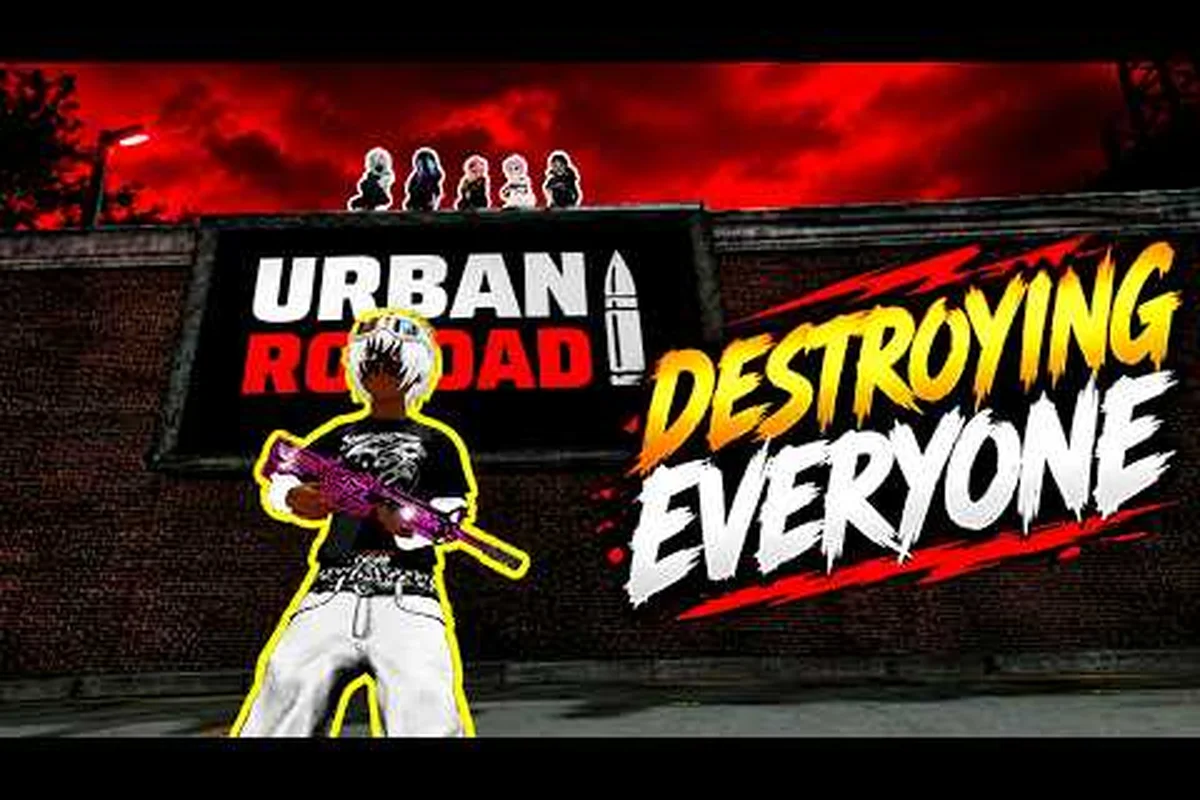
An urban reload meta loadout can turn uneven spawns into winnable fights, but the strongest choices depend on gun range, vehicle handling, and how aggressively you push. The guide below identifies practical S-tier and A-tier combinations without pretending one setup wins every match.
Current Meta Loadout Principles and Fast Picks
The current meta rewards consistent first-shot accuracy, fast healing, and a vehicle that lets you preserve an advantage instead of driving straight into danger. The best gun may not belong to the highest damage category, because accuracy, reload speed, and movement often decide a close-range duel before a rare weapon is fully utilized.
A useful urban reload meta loadout follows this structure: prioritize a primary weapon that can land repeatable first shots, then cover its weakness with a rapid close-range secondary. Healing should restore enough combat utility to support another engagement, while a maneuverable vehicle provides escape speed and survivability for rotations. This balance matters because entering a street fight at an advantage is often safer than relying on a higher-damage gun that cannot remain accurate under movement. The table below breaks these roles into first, second, mobility, and economy picks, making it easier to adapt the core urban reload meta loadout without overspending on one weapon class.
-
Primary weapon: An accurate automatic or assault rifle for mid-range engagements.
-
Secondary weapon: A fast-firing close-range option or shotgun for emergencies.
-
Healing item: A reliable heal that can be used without surrendering all mobility.
-
Vehicle: A maneuverable car with enough speed to create space and enough durability to survive incoming fire.
-
Attachments: Opt for handling and practical benefits instead of cosmetic upgrades.
Community gameplay supports the value of testing a strong primary weapon. IGoBySkoob’s video, I Used the Best Gun in Urban Reload, runs for 10 minutes and 55 seconds and demonstrates how weapon choice changes how a player approaches a fight. This is player experience rather than official balance data, so treat it as a useful example and test the setup in your own matches.
| Priority | Recommended choice | Main advantage | Best situation |
|---|---|---|---|
| First pick | Accurate assault rifle or automatic weapon | Reliable damage at useful ranges | Open and mid-range fights |
| Second pick | Fast close-range gun or shotgun | Better defense against rushing enemies | Buildings and tight corners |
| Mobility | Balanced sports or armored car | Control, escape speed, and durability | Rotations and high-risk entries |
| Economy | Reliable healing and ammunition | Keeps the loadout effective longer | Extended multiplayer matches |
What Makes a Loadout Meta?
A weapon is meta when it offers a useful balance of damage, accuracy, handling, and effective range. Raw damage matters, but a difficult recoil pattern or slow reload can reduce practical output. Likewise, the fastest car may be poor for survival if it makes braking and turning too unpredictable.
The urban reload current meta therefore rewards equipment that remains effective after the first burst. Players need enough mobility to reposition, a healing plan for mistakes, and a vehicle that supports a deliberate route. These qualities remain useful even when a rare gun appears in the match because the loadout should not depend on one lucky drop.
S-Tier Guns for the Urban Reload Current Meta
S-tier placement means a gun belongs in the strongest competitive selection, not that it wins every encounter. Urban Reload S tier guns should feel dependable when aimed correctly, punish common movement patterns, and avoid demanding perfect conditions to be useful. Exact weapon performance can vary by platform, attachments, and balance version, so rankings based on community testing should be revisited after updates.
Automatic Weapons for Mid-Range Control
Automatic weapons usually anchor a competitive loadout because they offer the strongest balance between reach and close-range output. Their advantage appears when a player can land an initial burst, control the crosshair, and use cover without losing all momentum. A weapon that is excellent in a clip but frustrating to aim rarely remains dominant for long.
The practical S-tier standard includes first-shot consistency, a reload that does not expose the player for too long, and enough movement to fight after taking damage. Players should compare the same weapon in both open terrain and a corridor because a long-range advantage can disappear when buildings compress the engagement distance.
| S-tier gun profile | Accuracy | Close-range reach | Mid-range reach | Recommended role |
|---|---|---|---|---|
| High-rate automatic | Very good | Excellent | Good | General-purpose primary |
| Hard-hitting rifle | Good | Good | Excellent | Long and medium engagements |
| Balanced assault rifle | Very good | Very good | Very good | All-round squad anchor |
| Rapid close-range automatic | Good | Excellent | Fair | Aggressive entry and cleanup |
For a broader weapon-by-weapon comparison, the Urban Reload weapon tier list can help narrow the field before you commit to a full build. Use it to balance the S-tier primary with an A-tier car rather than treating vehicle rank as a substitute for gun performance. A high-tier car can improve positioning and survivability, but it cannot repair poor first-shot consistency or weak mid-range reach. For example, pair a hard-hitting rifle with a vehicle suited to rapid rotations, then test the combination in both open terrain and corridor fights where buildings reduce effective engagement range.
Precision Rifles and Marksman Options
A precision rifle can earn S-tier status when it rewards deliberate aim without feeling slow in ordinary PvP. These weapons suit players who prefer cover, clear sightlines, and measured repositioning. Their weakness appears in rapid close-range attacks, so pairing one with a close-range secondary is often stronger than carrying two long-range guns.
Good marksman choices share predictable recoil, a clear view of distant targets, and enough mobility to avoid becoming trapped. The highest tier should be reserved for weapons that perform reliably without extreme attachments; if a gun only becomes competitive after a rare sight and a full set of upgrades, it offers less value than a versatile S-tier option.
Why Close-Range Firearms Still Matter
Players often overfocus on distant damage because a longer range weapon looks stronger on paper. Urban Reload S tier guns still need to function in the compact spaces that dominate many fights. A close-range firearm with quick handling can create the opening shot before an opponent stabilizes their aim.
That makes shotguns and rapid automatic weapons valuable secondary choices. They also make the best urban reload meta loadout more resilient: one weapon handles the first target, while the other covers the immediate counterattack. For players comparing every category, the Urban Reload weapon rankings also cover shotguns, SMGs, pistols, scopes, and related choices.
A-Tier Guns That Build Flexible Urban Reload Loadouts
A-tier weapons are not failure options. They are the dependable alternatives that remain effective when a top gun is unavailable, poorly suited to the current map, or claimed by another player. A good A-tier pickup can be the backbone of a full loadout, especially when its handling matches the player’s normal engagement distance.
High-Value Automatic and SMG Picks
Urban Reload A tier guns often sit just below the leading assault rifles but provide better accessibility, different handling, or stronger close-range output. They are especially valuable for new and intermediate players who should not depend on one dominant weapon. A reliable automatic can win fights without demanding the same discipline as a premium rifle.
| A-tier profile | Why it remains competitive | Best matchup | Loadout role |
|---|---|---|---|
| Accurate SMG | Fast damage and forgiving movement | Close and medium range | Secondary or aggressive primary |
| Versatile assault rifle | Strong general performance | Most encounters | Flexible primary |
| Semi-automatic rifle | Accurate bursts and easy control | Medium range | Hybrid role |
| Pump-action shotgun | High close-range pressure | Tight interiors | Emergency finisher |
| Lightweight pistol | Fast to equip and backup-friendly | Short emergency exchanges | Backup sidearm |
A tier should be evaluated by role fit, not merely by a weapon being second on a list. An A-tier SMG may outperform a higher-ranked rifle in a building-heavy match. Likewise, a pistol can save a loadout when the primary is depleted, although it should not be treated as a full replacement for a capable rifle.
Choosing a Secondary by Distance
The secondary weapon should solve a weakness rather than duplicate the primary. If your main gun wins at medium and long range, choose something fast enough for rushing opponents. If the main gun is optimized for close quarters, a steadier rifle can stop enemies before they reach you.
| Primary style | Secondary style | Result |
|---|---|---|
| Long-range rifle | Fast SMG or shotgun | Covers attacks from behind and inside buildings |
| Close-range automatic | Accurate assault rifle | Balances room clears with outdoor pressure |
| Balanced assault rifle | Lightweight pistol or SMG | Preserves ammunition without weakening the core plan |
| Shotgun-focused build | Automatic weapon | Covers opponents who survive the first blast |
This decision is central to an urban reload A tier guns strategy. The goal is not to carry the strongest item from every category; it is to create a loadout that remains functional when one component is missing or performs below expectations.
Best Cars Ranked by PvP Fight Style
A car can decide a match before either player exits the vehicle. Good handling allows a player to enter, fight from an angle, and leave without losing control. High speed helps when repositioning, but speed without control can turn a retreat into a wasted trip. Armor and durability matter because the car becomes a temporary shield rather than an invincible position.
The urban reload best cars ranked approach should separate entry power, roaming control, and survivability. A car that is excellent for one job may feel poor in another, and vehicle performance can shift with upgrades. Community footage such as The Grim Reaper gameplay shows how presentation and aggressive movement shape player perception, although it does not establish official vehicle statistics.
Entry Vehicles for Pressure and Impact
Entry-oriented cars prioritize acceleration, forward pressure, and the ability to force opponents into awkward positions. They suit players who prefer applying map control rather than lingering at long range. Their main weakness is that they can become trapped in corners if the driver overcommits.
| Vehicle type | Acceleration | Durability | Handling | Ideal use |
|---|---|---|---|---|
| Fast entry car | Excellent | Fair | Good | Quick dives and pressure |
| Balanced sports car | Very good | Good | Very good | General PvP roaming |
| Heavy armored car | Fair | Excellent | Fair | Holding exposed approaches |
| Utility vehicle | Good | Good | Good | Supply runs and mixed combat |
Support Cars for Control and Survival
Support vehicles give the player more time to observe threats and survive mistakes. They work best when paired with a gun that rewards accurate fire from a stable platform. The urban reload best car tier list should therefore account for the driver’s play style, because a support car used like an entry car will often lose its advantage.
For a broader breakdown of individual vehicles and unlock conditions, the Urban Reload car guide provides useful context on obtaining and evaluating different vehicles. That comparison matters for the urban reload meta loadout because vehicle mobility, health, and handling can determine whether an urban reload A-tier gun is used for quick kills or controlled repositioning. For example, a support vehicle with strong armor can absorb a mistake, while a faster car is better for escaping a losing fight and reaching a safer firing position. Check the guide’s vehicle details alongside your preferred S-tier or A-tier guns to identify combinations that suit solo survival, objective play, or team support.
Building an Urban Reload Meta Loadout in Practice
Start with a core combat loop: acquire a strong primary, secure healing supplies, choose a vehicle that matches your route, and keep one answer for close-range pressure. Do not chase every rare drop. A simpler setup with reliable ammunition, a clean sight picture, and a fast escape is usually more competitive than a collection of weapons you cannot use together.
Match Preparation Checklist
Prepare before entering a public lobby. Review your weapon attachments, carry healing items, and select a vehicle with controllable handling. Then decide where you will fight and what will happen if the first exchange fails. Strong players have a fallback position and know when to rotate rather than continue a bad fight.
-
Primary: Confirm the weapon can handle the intended engagement distance.
-
Secondary: Make sure it covers the primary’s weakness.
-
Ammo: Carry enough to support several realistic encounters.
-
Heals: Use them before a dangerous push, not after every small scratch.
-
Vehicle: Test steering, braking, and the visibility around the front and rear.
-
Attachments: Favor practical handling improvements over cosmetic combinations.
-
Route: Identify cover, alternate paths, and one retreat point.
Community testing is especially useful for vehicle behavior because a vehicle can react differently as upgrades, map routes, and traffic pressure change. The video How a 4KD Player Dominates Urban Reload Lobbies, published by ronsoytn and running 8 minutes and 41 seconds, includes settings and event gameplay that can help players compare handling approaches. These clips reflect player experience, not a controlled balance test.
A Practical Five-Step Loadout Process
| Step | Action | Decision criterion |
|---|---|---|
| 1 | Choose the gun role | Pick accuracy, range, or close-range pressure |
| 2 | Add the complementary weapon | Cover the primary’s weakest distance |
| 3 | Select the vehicle | Match acceleration or durability to the route |
| 4 | Equip attachments | Improve handling, control, or reload speed |
| 5 | Test the full combination | Check close, medium, and long engagements |
Test each combination in a low-risk area before committing to a high-traffic zone. The goal is not to prove that one setup is theoretically strongest; it is to create a loadout you can operate consistently. If you miss the first shot while handling an unfamiliar weapon, simplify the choices.
Loadout Adjustments for Different PvP Situations
A fixed meta setup can become predictable. Adjust one or two variables rather than replacing the entire loadout. If opponents repeatedly rush from the side, improve close-range handling. If they hold long sightlines, select a more accurate primary. If the vehicle is constantly disabled, use a durable option with predictable turning.
When the Lobby Is Aggressive
Aggressive lobbies reward quick decisions and close-range coverage. Carry a fast automatic weapon as the primary, a shotgun or rapid SMG as backup, and a balanced car with good acceleration. Avoid overcommitting to a slow scope when opponents are moving between buildings and vehicles.
When the Lobby Plays Slowly
Long-range and defensive lobbies reward a precise rifle, solid healing, and a vehicle with strong durability. A support-oriented car gives you time to watch entrances and reposition. Keep a close-range weapon because every quiet lobby can turn into a sudden three-way fight.
| Opponent behavior | Primary adjustment | Vehicle adjustment |
|---|---|---|
| Frequent rushing | Faster close-range handling | Better acceleration |
| Long sightlines | More accurate primary | Stable support vehicle |
| Heavy vehicle use | Improved burst damage | Better durability |
| Constant rotation | Moderate-range weapon | Balanced speed and handling |
| Close indoor battles | Shotgun or rapid SMG | Vehicle for quick arrival and exit |
The best urban reload current meta loadout is therefore a starting framework, not a rigid rule. Preserve the principles of accuracy, mobility, and backup coverage while changing the exact tools to match the lobby: use a precise rifle for long sightlines, swap to a shotgun or rapid SMG for close indoor battles, and select a vehicle with better acceleration or durability according to the table above. In a mixed lobby, a balanced-speed support car gives you enough time to reposition while keeping a close-range weapon ready for sudden three-way fights.
Frequently Asked Questions
Which gun should I use in the current Urban Reload meta?
Choose an automatic or assault rifle that is accurate, controllable, and effective at medium range, then add a close-range secondary. A meta loadout should not rely on one weapon because rare pickups vary and opponents often close distance quickly. Test several S-tier options and choose the one whose recoil and reload speed you can handle consistently.
Are S-tier guns always better than A-tier choices?
No. An A-tier automatic can outperform a less suitable S-tier rifle in a building-heavy match because close-range speed and forgiveness matter. The best S-tier guns offer the strongest overall ceiling, while A-tier options often provide better availability, distinct handling, or coverage for a particular play style.
What is the best car for general PvP?
A balanced car with responsive steering, useful acceleration, and dependable durability is usually the strongest general choice. Pure entry cars can outrun opponents but may struggle in tight turns, while armored vehicles survive longer yet often maneuver more slowly. Choose the vehicle that matches your planned route instead of relying on a single ranking.
Should I upgrade my car or buy better weapons first?
Improve weapons first when aiming consistency is your main weakness, because they determine whether you win the opening exchange. Prioritize vehicle upgrades when frequent collisions, damage, or difficult turning causes avoidable losses. Upgrade both only when your budget allows, and favor handling benefits that support movement rather than purely cosmetic changes.
How often should I change my urban reload meta loadout?
Reevaluate after major balance updates, when a new weapon performs unusually well, or when your current choices stop matching the lobby. Keep a stable core and make small substitutions. For example, retain your vehicle and healing plan while replacing an underperforming gun, which causes less disruption than rebuilding every component after each match.