
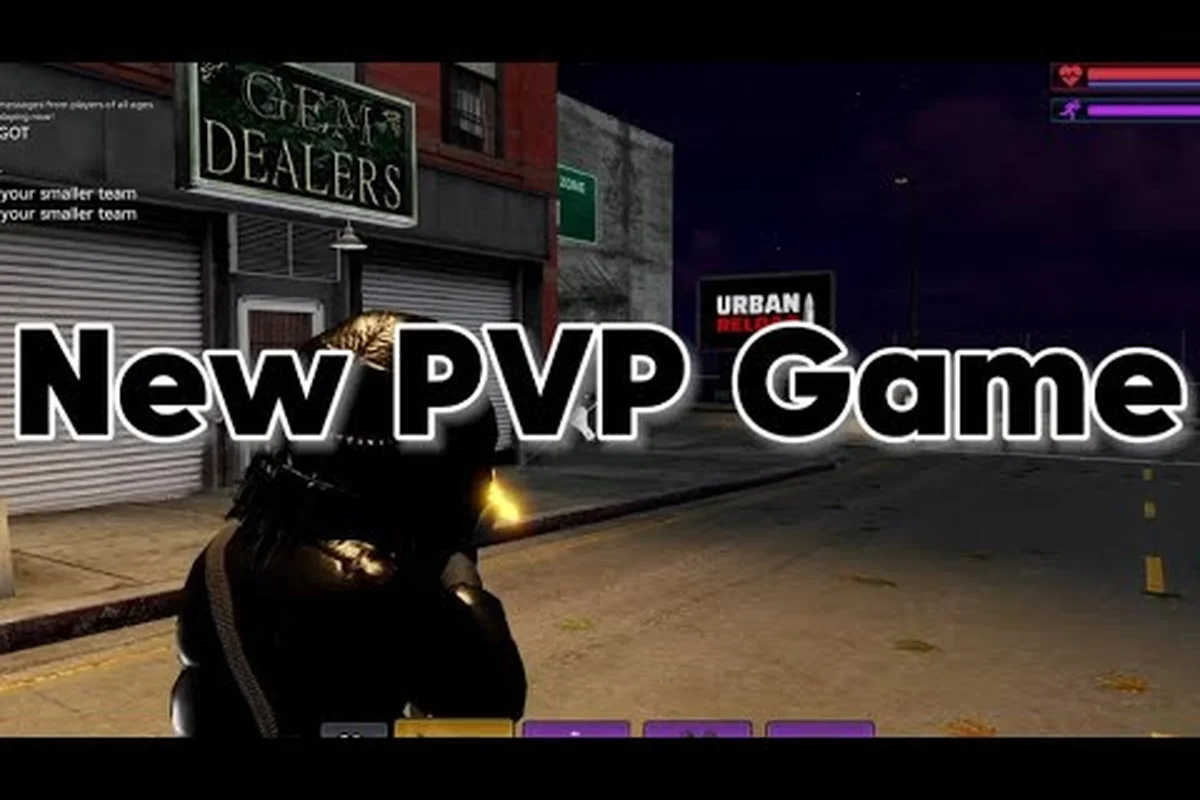
Urban reload pistol vs smg decisions come down to control: pistols excel in disciplined close-range fights, while SMGs reward fast positioning and sustained pressure. Knowing which advantage fits your playstyle can turn an even exchange into a decisive PVP victory.
Urban Reload Pistol vs SMG: Core Combat Differences
The urban reload pistol vs smg comparison depends on more than a single damage statistic. A pistol usually rewards precise spacing and quick target acquisition, while an SMG gives you more forgiving fire control when you need to keep moving or correct your aim. Neither category wins every fight, so the stronger choice depends on your opponents, map position, and confidence with each weapon.
A practical way to think about the distinction is discipline versus volume. Pistols are effective when you land clean shots and avoid wasting ammunition. SMGs are effective when you need to generate pressure before the enemy can create distance. That makes the pistol-vs-SMG choice less about a universal tier and more about which weapon converts your positioning into damage.
What Each Weapon Class Does Well
Pistols are often the cleaner choice for players who value first-shot accuracy and a short, predictable engagement. Their practical advantage is that a precise shot can end a close encounter before the opponent starts moving laterally. They are especially effective when you can catch an opponent entering a room, crossing a doorway, or turning a corner.
SMGs are built around rapid follow-up fire. Their fast fire rate makes missed shots less costly, provided you remain close enough to keep the target within your effective range. They also feel more forgiving when several opponents appear in quick succession, because you do not have to reset as frequently between bursts.
| Combat need | Pistol strength | SMG strength |
|---|---|---|
| First accurate shot | Excellent | Varies by model |
| Close-range pressure | Moderate | Excellent |
| Fast follow-up fire | Limited | Excellent |
| Long-range accuracy | Usually better | Usually weaker |
| Ammunition efficiency | Better | Worse |
| Movement during a duel | Often better | Good, depending on handling |
| Learning difficulty | Moderate | Moderate to low |
This table describes class tendencies rather than exact model statistics, so the urban reload guns tier comparison should be used as a starting point rather than a final verdict. In an urban reload pistol vs SMG matchup, weapon-level variables can outweigh the usual class advantages: a pistol with strong movement, damage, or reload speed can win close duels, while an SMG with high damage output can reward aggressive push-ups even if its accuracy or range fall short. In practice, the best gun for PvP depends on which model’s strengths align with the specific engagement distance.
The Decision That Matters Most
The best decision is usually made before you enter the fight. If the route ahead includes narrow corridors and short sightlines, an SMG often provides more usable damage during rapid movement. If the route contains open spaces, elevated positions, and longer peeks, a pistol may let you punish the first movement more efficiently.
That does not mean you should always bring one weapon and ignore the other. A loadout with a pistol for precision and an SMG for close-range pressure can cover more situations. However, carrying both becomes less effective if neither is maintained properly, because switching costs time that you may not have during a close duel.
For a broader view of available loadouts, the Urban Reload close-range weapons overview explains how pistols, shotguns, and SMGs occupy different roles when space is limited. A pistol is usually easier to control at medium range and reacts quickly to the first visible target, while an SMG’s higher rate of fire is better suited to sustained pressure in a hallway or stairwell. A shotgun can dominate an immediate corner encounter, but its narrow effective range makes it less flexible when the target has room to move. In practical terms, the best choice depends on the expected engagement distance: use the pistol for the initial peek, then rely on the SMG when the opponent closes the gap.
Urban Reload Pistol vs SMG: Speed, Damage, and Range
Speed is the easiest way to understand the urban reload pistol vs smg matchup, but it is not limited to the reload animation. It includes how quickly the weapon handles a target, how much damage it applies before recoil becomes disruptive, and how quickly you can recover from a missed burst.
Fire Rate and Time to Defeat a Target
An SMG’s higher rate of fire can create a short damage window, especially at close range. If your bullets connect, the enemy receives damage quickly and has less time to find cover or return accurate fire. Pistols usually deliver their damage in fewer shots, which makes every hit more valuable.
The practical calculation is simple. If the SMG fires three times for every pistol shot, you need to consider hit probability, not only the damage number. Against a stationary or slow-moving opponent, the SMG may win the time-to-kill contest. Against a target who repeatedly dodges or strafes, the pistol’s damage efficiency can become the more reliable result.
| Situation | Likely advantage | Reason |
|---|---|---|
| Target is close and moving slowly | SMG | Fast fire rate shortens the engagement |
| Target is strafing at medium range | Pistol | Concentrated damage rewards cleaner aim |
| Opponent reaches cover quickly | Pistol | A precise hit has greater value |
| Several opponents enter at once | SMG | Rapid follow-up shots create pressure |
| Ammunition supply is limited | Pistol | Fewer wasted shots conserve resources |
A real PVP test should include misses. Emptying an entire magazine into a wall does not help, while one well-timed pistol shot can preserve both ammunition and positioning. Community reports consistently emphasize that weapon choice matters less when the player does not account for movement, so treat raw fire rate as a conditional advantage rather than an automatic winner.
Reload Speed and Magazine Management
Reload speed can decide the second phase of a fight. If an SMG finishes its magazine while the pistol still has a round or two in reserve, the apparent fire-rate advantage disappears during the reload. A fast reload also makes it easier to retreat, re-engage, and control the same corner twice.
SMGs usually benefit from deliberate magazine discipline. A common technique is to fire only enough rounds to create an opening, then reload before the enemy resets. The same reflex is less useful with a pistol because its ammunition economy allows more direct target pressure, though players should still avoid reloading immediately after an empty magazine without checking the surrounding space.
| Ammunition state | Smart response |
|---|---|
| Pistol has several rounds left | Hold the angle and aim for a precise shot |
| Pistol is empty | Break line of sight before reloading if possible |
| SMG has one full magazine | Control burst length instead of firing continuously |
| SMG is nearly empty | Reload before pushing or taking a long sightline |
| Ammunition is scarce | Favor accurate shots and wider spacing between duels |
Effective Range and Accuracy
The urban reload pistol vs smg choice often becomes a range question. SMGs normally dominate inside their intended engagement zone, while pistols can remain useful farther out if their aim and damage hold up. Beyond the SMG’s effective range, extra rounds become misses, so switching to a closer route may produce a faster win than standing and spraying.
Do not treat an SMG as a long-range solution simply because it fires rapidly. Its recoil and spread make distant tracking harder to sustain, especially when the target changes direction. For players who need dedicated options for open engagements, the Urban Reload weapons list can help separate close-range weapons from rifles and other longer-range choices.
Choosing the Stronger Urban Reload PVP Weapon
The urban reload best gun for pvp is not one universal weapon; it is the gun that matches the space, the enemy behavior, and your ability to control recoil. A pistol is usually stronger in a clean one-on-one exchange when you can win the first accurate hit. An SMG is usually stronger when you can maintain pressure and prevent the opponent from creating a comfortable shooting lane.
When the Pistol Is the Better Pick
Choose a pistol when you expect short peek fights, slower opponents, or a duel where ammunition efficiency matters. The best pistol tactics are to hold the crosshair near the likely entry point, fire when the target commits to a visible area, and avoid wasting rounds on partially exposed opponents.
A pistol also benefits players who prefer deliberate positioning. Because the weapon generally places a premium on accuracy, moving unpredictably can be more valuable than chasing a rapid spray. Circle wide after your first shot, reload only when safe, and use corners to reset both aim and engagement distance.
Useful pistol habits include pre-aiming at head height, tracking an opponent’s likely peek angle, and keeping the crosshair stable while moving. In an Urban Reload pistol-versus-SMG duel, a good first hit often comes from patience: let the SMG user expose themselves before firing, then reset rather than chasing a missed shot. Treat every magazine as a finite resource, and reposition after each exchange instead of standing in the same lane for a predictable reload.
-
First-shot discipline: Fire when the opponent is visible enough for a reliable hit.
-
Crosshair placement: Keep the crosshair at head height near common corners.
-
Economy: Treat each round as meaningful because mistakes consume resources quickly.
-
Reloading safety: Retreat or change angles before starting a reload.
-
Spacing: Stay close enough for accuracy but outside the opponent’s easiest counterattack route.
When the SMG Is the Better Pick
Choose an SMG when fights are likely to last several seconds, especially in tight interiors or when opponents can flank quickly. Its advantage comes from maintaining a useful stream of fire while correcting a slightly off-center aim. Bursting is still important, but the burst can be longer than it would be with a pistol.
The strongest SMG player is not necessarily the one who fires fastest. It is the player who keeps the muzzle on target, uses short controlled bursts, and reloads before pressure disappears. If you learn the weapon’s spray pattern and practice tracking moving targets, the SMG becomes a dependable answer to aggressive pushers.
For example, an SMG player who starts a reload after a pistol opponent ducks behind a doorway may lose the pressure advantage that justified choosing the SMG; waiting until the opponent breaks line of sight can preserve momentum, but only if the remaining rounds still cover the immediate lane. This makes ammo awareness as important as fire control: if the magazine is nearly empty during a close hallway duel, a pre-reload at the first safe moment is often better than an emergency reload while the target is already exposed. In contrast, a reload pistol can be the better urban choice when ammunition is scarce or the fight favors a quick, precise reset, especially against an SMG user who must track a longer spray pattern.
-
Controlled bursts: Send enough rounds to threaten the target without losing the sight picture.
-
Close-range pressure: Keep moving toward the opponent instead of giving them room for a clean shot.
-
Pre-reload timing: Reload when the enemy breaks line of sight.
-
Target prioritization: Focus the first burst on the closest threat.
-
Lane denial: Use rapid fire to stop an opponent from safely crossing an opening.
Match the Weapon to the Map
Map knowledge can outperform a small difference in weapon quality. In a cramped corridor, an SMG’s sustained pressure is valuable because targets appear at very close distance. In a longer lane, a pistol may reward the player who can land a clean opening shot. Before choosing a loadout, walk the likely route and identify whether the critical encounters are corridor duels or long peeks.
| Map feature | Pistol advantage | SMG advantage |
|---|---|---|
| Narrow hallway | Moderate | Strong |
| Wide open courtyard | Strong | Moderate |
| Elevated peek angle | Strong | Weak |
| Small room with multiple entrances | Moderate | Strong |
| Long sightline with slow opponents | Strong | Moderate |
| Fast, close flank route | Moderate | Strong |
This is also why an urban reload guns tier comparison should be treated as a loadout comparison rather than a single list. A high-tier SMG can dominate a close-range map, while a well-controlled pistol can remain the better urban reload best gun for pvp choice when the fight begins at medium distance.
Urban Reload How to Keep Weapons Ready for PVP
Urban reload how to keep weapons refers to maintaining readiness across repeated matches, and small routines can prevent avoidable losses. The biggest advantage is preserving enough resources to fight a second opponent after winning the first exchange. Ammunition, reload timing, and spawn-to-route preparation all contribute to that readiness.
Build Around One Primary Role
A reliable loadout usually has one clear job. If your primary is an SMG, equip it for fast close-range engagements and avoid treating it as a general-purpose weapon. If your primary is a pistol, pair it with a setup that supports accuracy and first-shot pressure. A secondary weapon can cover a weakness, but it should not force you to switch in situations where the original gun remains effective.
When reviewing a complete arsenal, compare each gun by role instead of by an isolated tier label. The broader Urban Reload tier list can reveal where a weapon sits among other options, while your own comfort with the gun should remain the deciding factor.
Preserve Ammunition and Position
A PVP player who survives is often the one who did not need to empty a magazine. Save rounds by choosing effective range, firing short enough bursts, and breaking contact before reloading. Use movement to protect accuracy rather than firing continuously while backing away.
Prepare before the encounter begins. Confirm that you know the next cover point, identify one exit route, and decide whether the objective justifies a direct duel. This prevents the common mistake of defeating one opponent at the cost of ammunition and health that would have been useful against the next threat.
Compare Other Urban Reload Weapon Categories
The pistol and SMG are strongest when the duel stays within their intended ranges. A shotgun can overwhelm a stationary opponent at extremely close distance, while a rifle is better suited to controlled shots across a larger space. This urban reload shotgun vs rifle comparison highlights the tradeoff: the shotgun can erase the need for accuracy in a tiny room, whereas the rifle usually gives more consistent results over distance.
| Weapon category | Main strength | Main weakness |
|---|---|---|
| Pistol | Accurate, efficient individual shots | Lower sustained fire rate |
| SMG | Fast close-range pressure | Ammunition use and limited reach |
| Shotgun | Heavy close-range burst | Very poor beyond point-blank range |
| Rifle | Consistent medium-to-long-range fire | Less forgiving inside tight spaces |
For urban reload long range weapons, rifles and other accurate options deserve more attention than SMGs. A long-range loadout should still include a practical answer to an unexpected close encounter, because winning the first visible exchange is impossible if the opponent reaches your position before you can land a shot.
Practice the Weak Part of the Loadout
Every loadout has a weak scenario. A pistol player should practice moving targets, while an SMG player should learn how to stop spraying and land controlled bursts. Both should practice reloading under pressure because the animation can become more important than magazine size when a fight stretches longer than expected.
Community gameplay clips and player reports suggest that familiar weapons are often undervalued because players focus on acquisition rather than mastery. The practical result is simple: a weapon you can use consistently in unfavorable fights can outperform a nominally stronger option that you handle poorly.
Urban Reload Guns Tier Comparison by PVP Situation
An urban reload guns tier comparison becomes useful when it describes situations instead of assigning one universal rank. Pistols and SMGs occupy overlapping roles, but their relative value changes sharply with distance, player count, ammunition availability, and confidence. A useful tier system should answer the question being asked at that moment.
Situational Tier Framework
The tier labels below are a practical framework based on class characteristics rather than fabricated model statistics. Individual weapon names, attachment effects, and current balance can vary by platform or version, so confirm them against the version you are playing.
| Situation | Pistol tier | SMG tier | Primary consideration |
|---|---|---|---|
| One-on-one, medium range | Strong | Average | Accuracy and clean first shot |
| One-on-one, very close range | Average | Strong | Fire-rate advantage |
| Small-room free-for-all | Average | Strong | Sustained pressure |
| Open-map long range | Strong | Weak | Effective target range |
| Low-ammunition match | Strong | Average | Shots per elimination |
| High-pressure rush match | Average | Strong | Fast target acquisition |
| Mixed-range encounter | Strong with movement | Strong when closing | Flexibility |
S and A Tier Roles
In an S-tier role, the weapon should be highly effective without requiring ideal conditions. For this comparison, a strong SMG can occupy that role in close quarters, while a strong pistol can do so in controlled medium-range fights. Neither label means the weapon wins on every map; it means the player can exploit a clear advantage.
A-tier weapons remain effective when the situation is imperfect. They might lose to a more specialized gun in its ideal range, but they still offer enough damage, handling, or flexibility to punish mistakes. This is where many SMGs sit because their strong close-range pressure can compensate for weaknesses at longer distances.
B Tier and Situational Value
A B-tier weapon can be perfectly good when paired with smart movement, but it lacks a standout advantage when used outside its strongest conditions. Some pistols may fall here because their reload economy is good without having top-tier speed. Some SMGs may struggle when their spray pattern is difficult to control or their ammunition cost is excessive.
| Tier label | What it communicates | Example selection logic |
|---|---|---|
| S | Clear strength in a defined situation | Choose when that situation is likely |
| A | Strong overall with one minor weakness | Safe for recurring matches |
| B | Usable but dependent on execution | Pair with a complementary secondary |
| C | Noticeable limitations | Practice or replace when possible |
The Best Choice Still Depends on the Player
A weapons tier can help narrow the field, but it cannot account for every factor that affects a real duel. Your familiarity with recoil, movement timing, and target tracking often creates a larger practical difference than a small balance change. If a pistol is easier for you to keep on target, it may function as the stronger option even when an SMG has a higher theoretical fire rate.
That is the central conclusion of the urban reload pistol vs smg comparison. Pistols win through precision and efficiency. SMGs win through speed, pressure, and forgiveness. Choose the tool that makes your strongest skill relevant, then practice the situation where it is most likely to appear.
Frequently Asked Questions
Is a pistol better than an SMG in Urban Reload?
A pistol is usually better for accurate medium-range duels and situations where ammunition efficiency matters. An SMG is generally stronger at very close range because its rapid fire rate makes follow-up shots easier. The best choice depends on your accuracy, movement style, and the map’s sightlines.
Which weapon is easiest for new players to control?
The easiest pistol is usually the one with stable handling and forgiving aim, while the easiest SMG is the one whose spray pattern you can learn quickly. New players often perform better with a slower weapon if they can land consistent shots. Practice in a low-risk area before committing either one to high-pressure PVP.
What is the best close-range Urban Reload weapon?
An efficient SMG is a strong all-purpose answer because it offers fast follow-up fire, but a high-damage shotgun can overwhelm opponents at point-blank distance. Pistols remain useful when you need a cleaner first shot or better ammunition economy. Match the gun to the room size and your confidence.
Should Urban Reload players carry both a pistol and an SMG?
Carrying both can cover different engagement distances, but the setup is strongest when each weapon has a clear role. A pistol can handle precise shots while an SMG pressures close opponents. Avoid carrying a backup that duplicates the primary gun’s role or performs poorly during the reload transition.
How can I keep my weapons ready for repeated PVP fights?
Keep ammunition under control, reload during safe breaks in pressure, and practice a consistent route before each match. Carry a primary weapon suited to the map and a secondary that covers its main weakness. This preparation improves the urban reload best gun for pvp choice by making its strengths easier to use consistently.