
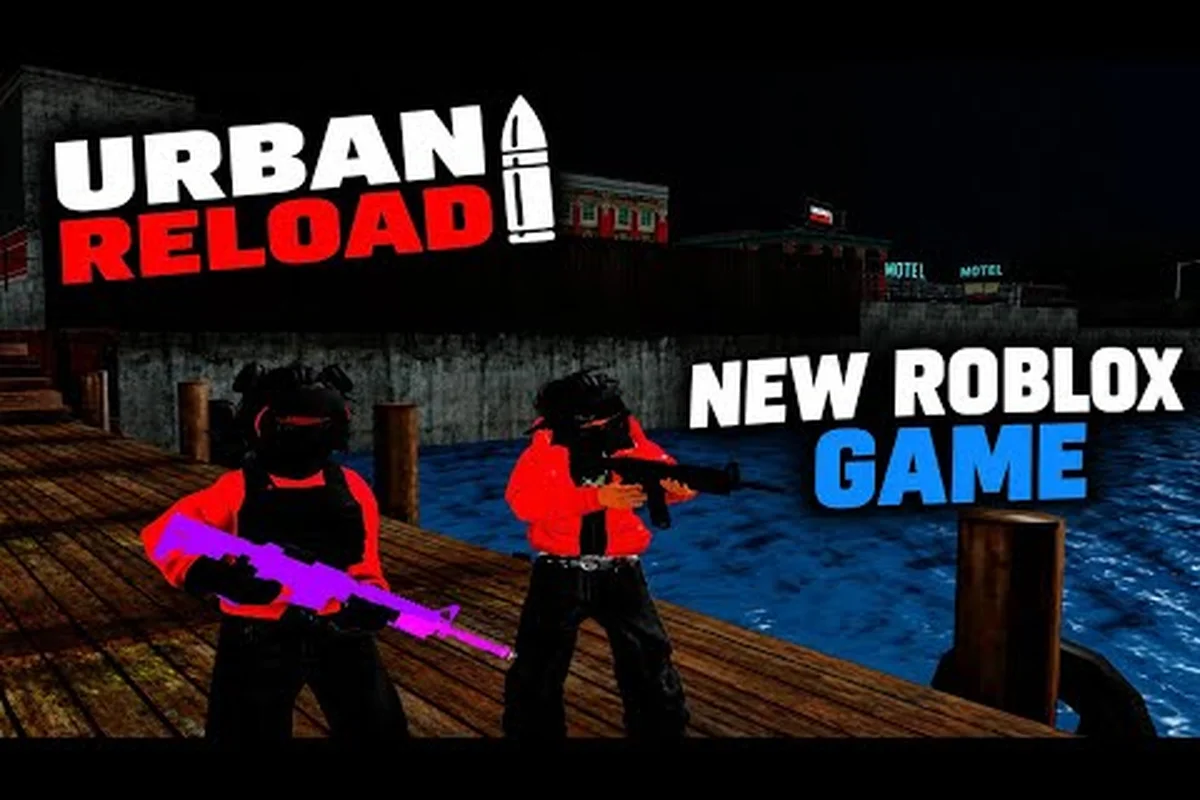
An Urban Reload disband crew decision can cost your group progress, shared access, and leadership momentum if it happens without a plan. The safest way to leave a team is to secure a successor, document open duties, and confirm that every member understands the final transition.
What Happens During an Urban Reload Disband Crew Decision?
An Urban Reload disband crew decision should be treated as a transfer of responsibility, not merely a menu selection. Crews are built around cooperation, shared objectives, and player availability, so the leader’s departure can affect more than one account if tasks, rewards, and coordination habits are left undocumented.
The available source material does not establish a universal disband button, a fixed penalty, or a guaranteed loss of in-game items. It does identify the game’s developer through the Suitchi7 Roblox profile, confirming Suitchi7 as the owner of Squad Labs and the developer behind Urban Reload. Because no official guide supplied here defines the exact interface, menu labels, or consequence values, players should verify those details inside their current client rather than rely on unverified claims.
A careful transition still matters even when a direct disband command is simple. The leader may know which rewards are ready to claim, which players are still active, and how the group distributes responsibilities. Losing that information is often more damaging than the disband action itself.
-
Leader status: Identify who can disband the crew and whether leadership must be transferred first.
-
Active-member list: Check which accounts joined recently or still expect group access.
-
Shared objectives: Record unfinished crew activities and any deadlines visible in the game.
-
Reward status: Confirm which bonuses or earned items have already been collected.
-
Communication record: Leave a short written summary for members who cannot be contacted directly.
| Pre-disband checkpoint | What to verify | Why it matters |
|---|---|---|
| Leadership | Who currently controls the crew | Determines whether transfer is possible |
| Membership | Who is active and who has stepped away | Prevents confusion about access |
| Activities | Which group tasks remain open | Preserves unfinished progress |
| Rewards | What has been claimed or is still available | Avoids duplicate collection or missed bonuses |
| Records | Where duties and plans are documented | Makes the transition easy to understand |
Prepare Crew Role Assignment Before Leadership Changes
Urban Reload crew role assignment becomes important because the outgoing leader often holds knowledge that no single menu entry can preserve. Even if the game handles leader status automatically after disbanding, players still need a clear division of communication, activity planning, and reward checks.
Start with a simple responsibility sheet. Identify the person who will coordinate the next crew activity, the person who checks available rewards, and the person who keeps the membership list current. If only one successor can be selected, choose someone reliable and active rather than the player with the highest statistics. Availability is often more valuable during the transition than past performance.
Document the outgoing leader’s knowledge
Record information that cannot be inferred from the crew interface. This may include where rewards are claimed, which activities the group runs together, and what each member expects to happen next. Keep the record concise enough that a successor can understand it in a few minutes.
Use a temporary responsibility matrix
A temporary assignment avoids leaving every task with one person. Even a small crew can divide coordination from reward checks, and the arrangement gives the incoming leader room to adjust after the official change.
| Responsibility | Best temporary owner | Handoff detail |
|---|---|---|
| Crew communication | Most active member | Send the current schedule and next objective |
| Activity coordination | Successor candidate | Explain the group’s normal routine |
| Reward verification | Second active member | Record what is claimed and what is pending |
| Membership updates | Outgoing leader | Note recently active and inactive accounts |
| Escalation contact | Successor candidate | Record how the group reaches the remaining leader |
Urban Reload crew activity should also be considered from a workload perspective. A crew that depends on one organizer becomes fragile when that person plays less. By assigning a second member to verify rewards and a third to announce activities, the group can continue functioning even if one participant misses a session.
If the group is rebuilding, the Urban Reload create a crew guide can help frame shared responsibilities before recruiting more members. The relevant point is not to impose unnecessary bureaucracy; it is to make expectations visible so that a future disbanding decision does not require the leader to remain indefinitely.
Compare Crew Activity, Squad Play, and Solo Results
The practical difference between organized crew play and solo play is coordination cost. A crew can divide attention, react to opponents, and share objectives, but every additional member can also add communication overhead. Understanding the urban reload crew vs squad distinction helps a leader decide whether disbanding is actually necessary or whether a temporary break would preserve the group more effectively.
Player experience supports the value of both approaches. In SKI’s Urban Reload streets gameplay, a 7-minute-55-second community video, coordinated movement and PvP situations illustrate how active teammates can shape an encounter. By contrast, Risky’s Urban Reload solo-versus-everyone video runs for 2 minutes and 3 seconds and demonstrates the deliberate pressure of handling opponents alone.
These videos are community examples rather than controlled balance tests, so they should not be treated as proof that one format always produces better results. They do demonstrate two viable play styles: sharing the tactical load with a crew or accepting greater personal responsibility as a solo player.
| Play style | Main advantage | Main limitation | Best transition decision |
|---|---|---|---|
| Full crew | Shared reactions and divided attention | Scheduling and coordination | Assign responsibilities before disbanding |
| Small squad | Quick coordination with fewer members | Limited coverage | Keep roles narrow and predictable |
| Solo play | Complete control of decisions | Every task falls on one player | Record only personal goals and rewards |
| Temporary break | Preserves relationships and history | Activity may pause | Set a return checkpoint instead of disbanding |
For the urban reload squad vs solo choice, the key question is whether the group’s benefit comes from member count or from a specific partner’s usefulness. Two reliable players may coordinate more effectively than six inactive accounts. Likewise, solo play becomes easier to manage when the player stops expecting a crew schedule and focuses on a repeatable personal routine.
| Scenario | Recommended action | Reason |
|---|---|---|
| Most members have stopped playing | Prepare a final activity and record rewards | The group is no longer active |
| One member wants full control | Offer leadership transfer | It avoids a disruptive reset |
| Players still enjoy occasional sessions | Use a temporary break | Preserves the crew without daily obligations |
| Everyone plays independently | Disband after final checks | Continued membership adds little value |
| A new group is forming | Move shared notes to the successor | Keeps knowledge with active players |
Use an Urban Reload Crew Handoff Plan
An Urban Reload crew handoff plan should convert the outgoing leader’s personal routine into instructions that another person can follow. The goal is not to control every future decision; it is to prevent avoidable confusion after the disband action becomes final.
Create a final group checklist
Start by posting a short notice with the date, reason, and expected effect on communication. The message should not imply punishment or blame. A neutral notice reduces the chance that inactive members interpret the decision as a hostile takeover or an unexplained revocation of access.
Next, identify one final crew activity that everyone who still wants to participate can complete. The chosen activity should not depend on an unverified reward multiplier or a hidden game mechanic. A normal group objective is easier to explain and safer to document.
| Order | Action | Completion evidence |
|---|---|---|
| 1 | Confirm the leader’s authority | The current interface shows the expected account |
| 2 | Select and inform a successor | The successor understands the role |
| 3 | Record active members | The list includes recent participants |
| 4 | Finish or note open activities | No shared objective is left ambiguous |
| 5 | Check reward status | Pending and claimed items are recorded |
| 6 | Announce the transition | Members know when and why it occurs |
| 7 | Complete the disband action | A screenshot or note confirms completion |
Write a concise handoff message
A useful message answers five questions: who is leaving, what remains active, who can help with immediate questions, what has been completed, and where the permanent record can be found. It should avoid blaming individual players and should not promise details the interface does not confirm.
Players who want to build a more sustainable replacement can use the Urban Reload play with friends guide to set clearer expectations around group sessions. The strongest replacement plan focuses on a stable schedule and two people responsible for coordination rather than simply recruiting as many members as possible.
Protect Team Benefits and Shared Progression
Before completing an Urban Reload disband crew action, verify every benefit that players may expect to retain. The supplied sources do not confirm a fixed list of crew perks, so the safest approach is to inspect the current game interface and avoid promising that a crew bonus will transfer automatically.
Separate benefits into three categories: already earned, currently available, and uncertain. Already earned rewards can be recorded in the final message. Currently available rewards should be claimed by the appropriate member if the interface allows. Uncertain benefits should be described only as uncertain, not presented as guaranteed losses.
Classify each crew benefit
| Benefit type | Before disbanding | After disbanding |
|---|---|---|
| Claimed item | Record who received it | Expect no further change |
| Ready-to-claim reward | Confirm and claim if possible | Verify whether the claim window closes |
| Crew activity bonus | Check whether it has triggered | Record the final outcome |
| Access-based feature | Confirm whether tied to membership | Check whether access persists after leaving |
| Leader-only control | Assign or use it first | Confirm no outstanding task remains |
| Unverified bonus | Mark as unknown | Do not promise a result |
The distinction between a crew and a squad also affects this checklist. A crew generally operates as a persistent social unit, while a squad describes a smaller tactical formation. When comparing an urban reload crew vs squad, think about the administrative layer: the squad coordinates the immediate fight, while the crew handles membership, shared planning, and longer-term continuity.
If leaving means the group will stop forming entirely, preserve practical knowledge separately from account access. Save the member list, current activity, and reward notes. This lets members form a new crew later without recreating everything from memory. Players focused on personal progression can also compare a dedicated Urban Reload shop guide, which covers earning while playing and efficient farming options that may fit solo sessions better.
Decide Whether to Disband, Transfer, or Pause
The best alternative to disbanding depends on the group’s real problem. Schedule friction calls for a lighter commitment. A leadership disagreement calls for a transfer. Complete inactivity calls for a clean exit. Treating every problem as a disband decision can destroy a useful crew that simply needs different boundaries.
Transfer when another member can lead
A transfer preserves the crew’s identity and shared history while moving administrative responsibility. It is usually better when the successor already communicates with the group, understands the current activity, and has demonstrated reliable follow-through. Tell the successor what the role requires before the formal change so nobody accepts leadership accidentally.
Pause when the group wants to return
A pause is suitable when members remain interested but cannot maintain a regular schedule. Set a concrete review date, identify whether only one person is responsible for notifications, and define a minimum attendance expectation. If nobody accepts those responsibilities, a pause becomes an indefinite limbo that is effectively a slower disbanding.
Disband when the group has no active purpose
Disbanding makes sense when most members have left, future sessions are unlikely, and no one wants to manage the remaining accounts. Complete the handoff checklist first, then perform the action and retain a personal record. The Urban Reload complete guide can help players identify whether their departure is part of a broader shift from regular crew play toward individual progression.
| Leadership condition | Recommended action | Expected result |
|---|---|---|
| A trusted active member wants the role | Transfer leadership | The crew continues with new oversight |
| Members want to regroup later | Pause and set a review date | The group stays available without constant management |
| Most members are inactive | Disband after final checks | The old crew ends cleanly |
| Members need different schedules | Rebuild around available players | A smaller, consistent group forms |
| The leader is leaving for good | Hand off records, then disband | Knowledge survives the roster change |
Urban Reload how to dominate with crew tactics depend less on adding names than on clarifying purpose. A smaller crew that shares one objective, assigns one coordinator, and agrees on a schedule can act more decisively than a larger group without clear ownership. That principle applies whether the chosen solution is a transfer, a pause, or the final disbanding action.
Confirm the Disband Action and Communicate the Outcome
After the transition, verify what the game interface actually shows. Do not assume that shared rewards persist, disappear, or become transferable based on community guesses. Record the visible result, notify relevant members, and update any external crew notes so the group does not continue scheduling events under an inactive roster.
The final message should state the outcome plainly. It can identify the former leader, acknowledge the group’s shared activity, confirm where the summary was saved, and explain who will handle immediate questions. This is especially important when the urban reload squad vs solo choice causes the crew to split, since members may move between solo sessions, small squads, and new crews without later coordination.
| Final status | Verification action | Communication detail |
|---|---|---|
| Leader transferred | Confirm the new leader | Name the successor and handoff point |
| Crew disbanded | Confirm the roster state | Explain that the old crew no longer accepts activity |
| Rewards claimed | Review the reward screen | Record what was received |
| Open activity ended | Verify its status | Note whether it completed or expired |
| Member records retained | Check the local notes | Preserve contact details only if appropriate |
A calm closing note also reduces the chance of confusion among players who missed the original announcement. Explain that no individual player is being blamed, because a disbanding decision usually reflects availability and organizational fit rather than performance. If the crew plans to reform later, include the approximate review date without making promises about members who have not agreed to return.
Urban Reload disband crew planning ultimately comes down to preserving useful coordination while releasing responsibilities that no longer have an owner. The right sequence is straightforward: verify the current interface, document the crew’s state, assign a successor when possible, communicate the outcome, and record what happened. That process leaves the group better prepared whether its members continue together, form another team, or return to solo play.
Frequently Asked Questions
Can you disband an Urban Reload crew without giving leadership to someone else?
The supplied sources do not confirm the exact requirement, menu label, or consequence. Check your current client for an owner-transfer option, then use the crew interface to verify whether disbanding is available. Record pending rewards and open activities first, because leadership knowledge may disappear once the crew closes.
Does leaving a crew delete rewards that members already earned?
No verified source provided here states that disbanding deletes previously claimed items. Treat earned rewards as retained unless the game explicitly says otherwise, but verify claim records before the final action. Avoid promising players that pending bonuses or access-based features will survive without checking the live interface.
Should a crew disband when only one or two members remain active?
Disbanding can be reasonable if those members no longer coordinate and prefer separate sessions. Consider transferring leadership if the remaining group still enjoys playing together, because a smaller crew may retain the social benefits while reducing scheduling pressure. The choice depends on actual participation rather than roster size alone.
What is the easiest way to transfer crew responsibilities?
Choose a successor who is active, communicates clearly, and understands the current objectives. Document their tasks, reward status, and open activities before making the official change, then confirm the new role in the interface. A shared responsibility sheet can cover both the temporary leadership period and the final disbanding.
Is playing solo usually better than joining a crew?
Neither approach is always better. Solo play offers control and works well for personal farming routines, while crew play can distribute reactions and make difficult encounters more manageable. Community videos such as Risky’s solo challenge and SKI’s streets gameplay illustrate both styles, though they are examples rather than controlled comparisons.