
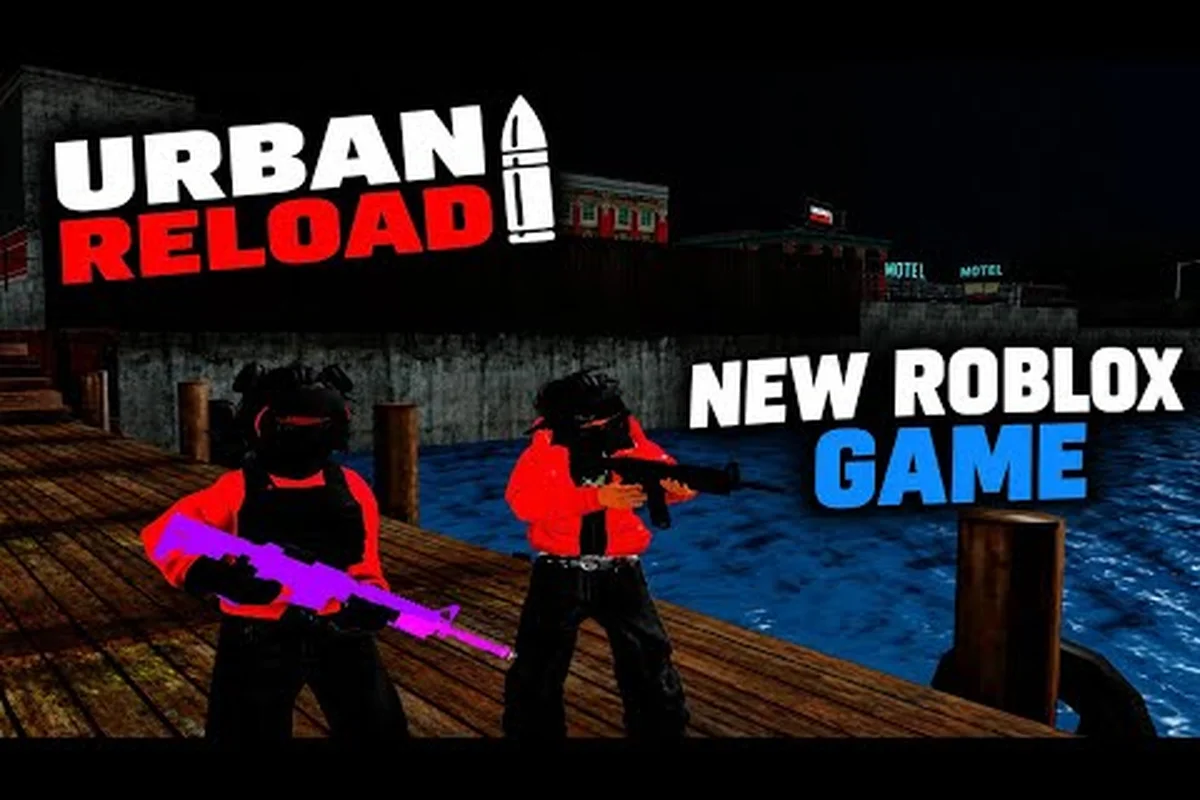
A strong Urban Reload team up guide turns uneven teammates into a coordinated squad, which matters because positioning, target selection, and communication matter more than simply adding players. Learn how to assign roles, practice reliable callouts, and turn a temporary group into an effective fighting unit.
Why Urban Reload Works Better With Friends
A successful Urban Reload crew does more than occupy the same area. Each teammate should have a clear responsibility, predictable movement, and a way to communicate danger without stopping the action. The best strategy depends on player skill, available weapons, and whether the squad is defending, advancing, or searching for an opening.
Think of the crew as three connected layers: the point player gathers information, the support player preserves useful positions, and the closer finishes the engagement. These labels describe a plan rather than fixed character classes, so players can exchange duties when a match requires it.
| Crew function | Main responsibility | Best action before a fight |
|---|---|---|
| Point player | Detect threats and open routes | Move first from a covered position |
| Support player | Control angles and protect the point | Hold an off-angle with line of sight |
| Closer | Convert an opening into a finish | Move only after the target is exposed |
| Reserve | Stabilize the team after mistakes | Cover a flank or regroup the crew |
Match State Matters More Than Roles
The same lineup can behave differently in a crowded street, a narrow corridor, and an open area. In tight spaces, stacking teammates reduces visibility and increases friendly-fire mistakes. In open areas, grouping makes every crew member easy to track. Players should adjust spacing without abandoning their assignments.
A practical rule is to keep one clear direction of pressure. If the point player notices an opponent to the left, support should watch the right, and the closer should preserve a path to retreat. When all three players move toward the same unknown noise, they create a predictable target rather than a coordinated attack.
Build Communication Around Useful Actions
Short callouts work best when they describe what a teammate needs to know. “Enemy left” is more useful than a reaction, while “I’m reloading” tells nearby players why the point is temporarily vulnerable. Use names consistently, limit overlapping callouts, and reserve a separate warning for urgent information.
The foundational Urban Reload crew tips begin with consistency. Decide what words mean before the encounter, rehearse them in a safe area, and avoid assigning several people to speak at once. New players should also review the broader Urban Reload beginner guide to reinforce basic controls and movement habits.
Urban Reload Crew Roles for Beginners
New crews often make the mistake of copying experienced players without understanding why those players hold certain positions. A useful beginner setup prioritizes communication, spacing, and a clear recovery plan. Each member should have one main task and one backup task, preventing hesitation when the first plan breaks down.
Beginner-friendly crew roles are best treated as temporary assignments during a match. Swap roles when a player has better gear, stronger map knowledge, or greater comfort with close-range combat. The goal is not to balance the team on paper; it is to keep every teammate contributing during the encounter.
| Situation | Point player | Support player | Closer | Reserve |
|---|---|---|---|---|
| Narrow corridor | Check first | Hold rear | Wait for exposed target | Prevent rear pressure |
| Open street | Watch distant angles | Cross-cover nearby | Close after first contact | Keep escape route |
| Building interior | Clear room entrances | Watch doorway and flank | Finish isolated target | Secure the group |
| Defensive position | Identify approaching threats | Maintain main angle | Prepare flank pressure | Watch behind the crew |
Point Player: Gather Information Without Overextending
The point player carries the crew’s early information. Their job is not to win every exchange; it is to learn where opponents are and whether the route ahead is safe. Short, controlled peeks are more valuable than a long push into an unseen space.
A strong point player changes pace when the route becomes uncertain. They stop, listen for movement, adjust their angle, and give the rest of the squad a clear update. If they lose contact with the group, they should return to the last confirmed position rather than create a second front.
Support Player: Preserve a Usable Angle
The support player prevents a successful point push from becoming a flank. They should choose a position that overlooks the likely approach without directly overlapping the point player’s line of sight. This lets the support player react to threats approaching from the side or rear.
Cover matters here. The practical ideas in the Urban Reload movement tips guide can help a support player strafe between stable cover, change elevation, and avoid becoming a stationary target. The support player should also avoid firing through the point player unless the shot is genuinely clear.
Closer and Reserve: Finish Without Overcommitting
The closer enters after the point player reveals the target, while the reserve protects the crew’s recovery route. This arrangement creates a two-stage attack: information first, pressure second. It also leaves the reserve available to stop an opponent who tries to exploit the temporary gap.
If the closer is equipped for rapid movement but has low endurance, they should preserve energy until the opening appears. If the reserve has stronger ranged options, they can provide the finishing shot while the closer prevents escapes. Loadout quality can influence these assignments, especially when players are still unlocking stronger equipment.
Coordinating the Best Crew Strategy
The best crew strategy depends on reading the battlefield before committing. Start by asking three questions: Where is the safest usable cover? Where can the team be attacked from? What must happen before the crew can safely advance? Answering these questions takes seconds and prevents many uncoordinated pushes.
A practical squad cycle is observe, assign, commit, reset. The crew observes the area, assigns roles and spacing, commits to one clear action, then resets if the fight breaks apart. The reset stage is essential because a failed engagement should lead to regrouping rather than three separate pursuits.
The Four-Step Engagement Plan
| Step | Time in mind | Crew action | Primary error to avoid |
|---|---|---|---|
| Observe | Several seconds | Check entrances, flanks, and nearby cover | Rushing through blind corners |
| Assign | A few seconds | Select point, support, closer, and reserve | Giving everyone the same task |
| Commit | One coordinated push | Move from multiple angles with clear purpose | Attacking without a fallback |
| Reset | Immediately after contact | Regroup behind usable cover | Chasing isolated opponents |
Use Overlapping Fire, Not a Single Line
A single-file crew is easy to collapse. A staggered formation gives the group more options, but it must remain understandable. The point player can begin from the left side of cover, the support player can hold the right side, and the closer can wait behind the second position before rotating in.
The reserve should watch behind the formation and protect the crew’s return path. When a fight moves, the reserve calls the shift rather than firing randomly into the new area. This avoids a common mistake: everyone reacting to the opponent they can see while ignoring the opponent nobody is watching.
Choose One Objective at a Time
A group often performs worse when it tries to collect, eliminate, and secure objectives at the same time. Assign one immediate objective, such as clearing the corridor or covering the point player’s approach. Once that objective is complete, reassess positions before moving to the next.
For crews that need better equipment, the Urban Reload weapon unlock guide can provide a separate progression track without distracting from coordinated play. Keep the current objective in mind, though: improving one teammate’s gear matters less if the squad cannot identify roles or communicate danger.
Urban Reload Crew Tips for Common Match Situations
Every encounter tests a different part of the crew system. In a narrow hallway, the point player should hold the forward corner while the support player covers the rear approach, preventing enemies from isolating the reload operator. In an open area, spreading the crew apart creates safer reload windows, but only if teammates can cover each other’s sightlines. When an enemy retreats, the squad should follow with staggered spacing instead of stacking behind the point player, because a tight push can block cover access and leave the rear support player exposed.
These scenarios use practical crew tips rather than fixed rules. Adapt them to the players, weapons, and map conditions in front of you rather than forcing every group into the same formation. For example, if the point player is carrying a slow-firing weapon, the support player can watch the rear angle during the reload window instead of rushing forward. If both players have strong stopping power, the crew can rotate more aggressively and use cover-to-cover movement. On a narrow urban map, keep the reload operator within the support player’s line of sight; in an open zone, create enough distance to avoid a shared elimination while preserving quick cover access.
Holding a Narrow Passage
The support player should control the main entrance while the point player checks for an alternate route. The closer stays behind the support player and attacks only if the target enters a clear line of fire. The reserve watches behind the group because a blocked front does not mean the rear is secure.
Do not stack everyone in the passage. If the team must cross, move in small gaps while keeping one player ready to provide information. When players learn how to hold angles and recognize threats, the strategies in the Urban Reload clutch tips guide can further strengthen late-round recovery decisions.
Taking an Open Area
Open areas require two things: movement between cover and support from more than one direction. The point player checks the next piece of cover without lingering in the center. The support player observes the side the point cannot see. The closer waits for a confirmed opening, and the reserve monitors the space behind the formation.
Cross-cover is valuable when it is controlled, not chaotic. The point player should cross only after the support player suppresses the lane or distracts an opponent watching the approach, while the closer waits for a confirmed opening and the reserve protects the rear. For example, if a player needs to move from one barrier to the next, the support player can fire toward the exposed edge to create a brief movement window; random jumping or sideways strafing instead leaves the crew with overlapping hitboxes and a wider target area, making the point player easier to eliminate.
| Open-area mistake | Why it hurts | Better correction |
|---|---|---|
| All players cross together | Everyone shares one exposure window | Stagger the movement |
| Point player stands in the center | Silhouette remains visible longer | Use the edge of cover |
| Support fires through allies | Friendly fire or missed chances | Wait for a clear shot |
| Closer pushes without support | Squad loses its recovery route | Wait for a confirmed opening |
Retreating or Regrouping
A retreat is a legitimate squad decision when the team has no usable angle. The point player should not keep the fight alive alone; that creates a predictable chase. Instead, the crew should establish a fallback location, protect it from both directions, and regroup before deciding whether to return.
The reserve can hold the reentry route while the point player assesses whether the original position is safe. This prevents the squad from splitting into isolated duels. If the match includes a cash or objective phase, use downtime to restore resources rather than forcing a risky immediate return.
Improving Team Communication and Decision-Making
Communication only matters when it changes a decision. “Enemy ahead” tells the crew what to know; “I’ll move left, hold the doorway, and cover me” tells them what to do next. Assigning both information and action reduces hesitation during chaotic moments.
Use a three-call system for the early stages of a squad: contact, direction, and intent. Contact identifies a threat, direction identifies its location, and intent states the proposed response. For example, “Contact, right side, holding cover” is brief and complete.
Keep the Callout Order Simple
| Callout | Meaning | Example response |
|---|---|---|
| Contact | An opponent or danger is present | “Contact, two left” |
| Direction | Where the threat appears to be | “Right side of the doorway” |
| Intent | What the speaker will do | “I’m holding; point forward” |
| Status | A crew condition affecting the plan | “Reloading” or “need backup” |
| Correction | New information overriding an assumption | “False alarm, teammate” |
Assign a Temporary Communication Leader
A communication leader prevents conflicting calls, reduces duplicated movement commands, and keeps the squad aligned with the current urban reload objective. Make this role temporary so one confident player does not become a bottleneck during the urban reload crew’s next rotation. The leader tracks the team’s positioning and coverage, checks whether each teammate has a task, and asks who needs backup before a push or rotate. For example, if one teammate holds a sightline while another has no assigned cover, calling out that gap prevents the team from bunching up or leaving the rear exposed.
The leader should not micromanage every shot. Their job is to maintain the shared plan: identify the point, confirm the support angle, and signal when the crew should commit or reset. When the leader is eliminated or separated, another teammate should immediately take over.
Use Practice Scenarios
Short, low-risk drills make coordination more reliable. One drill begins with one teammate entering a room, another holding the doorway, and the third moving through a side route. Another asks each player to name the next action before any movement. A third focuses on retreat communication after a simulated loss.
Keep each drill brief and measurable. The useful measures are whether the support player maintains an angle, whether the closer waits for confirmation, and whether the reserve notices rear danger. Players can refine movement independently through the Urban Reload strafe and cover guide while preserving the communication structure that makes group play work.
A Session Review Checklist for Your Crew
A team-up plan becomes stronger after every session if the crew reviews what actually happened. The Urban Reload crew update process should focus on observable habits rather than assigning blame. Compare the intended roles with the positions players actually occupied, then adjust the next plan.
Community-reported experiences suggest that beginners often improve faster with one established structure than with a complicated set of signals. Treat that as community guidance rather than an official mechanic, and adjust the structure if it does not match the players’ strengths.
After-Match Review Questions
-
Did the point player identify threats before the closer moved?
-
Did the support player cover a different angle from the point?
-
Did the reserve have a clear job during the main engagement?
-
Did the crew regroup after losing the first advantage?
-
Which callout was missing when the formation broke?
| Review area | Success signal | Next adjustment |
|---|---|---|
| Role clarity | Every player knows the immediate task | Repeat assignments before the next round |
| Spacing | Players occupy separate useful angles | Adjust entry order and timing |
| Communication | Calls identify threat, direction, and intent | Remove vague reactions from the call list |
| Recovery | The crew regroups after contact | Assign a retreat route in advance |
| Decision quality | The group commits for a stated reason | Avoid attacking unknown sounds |
Keep the Plan Easy to Remember
Use one short cue for each situation. “Point checks, support holds, closer follows” is enough for a standard push. “Two on door, one on flank” is enough for a corridor. If players must remember several paragraphs of instructions, the plan is too complicated to work under pressure.
The goal of any Urban Reload crew update is not to create perfect behavior in one match. It is to remove one recurring error at the next opportunity. If the crew keeps losing enemies through the flank, change the reserve position. If everyone rushes the same entrance, assign a point player. Small corrections compound quickly.
Frequently Asked Questions
What is the best way to team up in Urban Reload?
The best way to team up is to assign a point player, a support player, a closer, and, when possible, a reserve. Begin by choosing one shared objective, maintaining enough spacing to avoid a single collapse, and assigning one clear callout order. Review the formation afterward so each match improves the next one.
Should beginners use fixed crew roles in Urban Reload?
Beginners benefit from fixed temporary roles because they reduce uncertainty during an engagement. The point player gathers information, support protects the flank, and the closer waits for a confirmed opening. Players can switch roles when the lobby changes, but the crew should agree on the new assignments before entering danger.
How many players make a good Urban Reload squad?
Three players provide a strong balance of information, support, and finishing pressure. Two players can also coordinate effectively when each watches a different route, while larger groups need stronger communication to prevent crowding and conflicting objectives. The right size depends on whether everyone can communicate clearly during movement.
What are the most useful Urban Reload crew tips for new players?
New players should keep callouts short, avoid stacking at entrances, protect one retreat route, and assign one player to watch behind the main formation. They should also avoid chasing after the first advantage disappears. Consistent spacing and clear role assignments usually improve results faster than complicated formations.
How often should an Urban Reload crew change its strategy?
Review the strategy after each match and change it when the same problem appears twice. That might mean changing the point player, assigning a dedicated reserve, or using a different entry order. Small adjustments are easier to execute, so avoid redesigning the entire plan after a single unusual loss.