
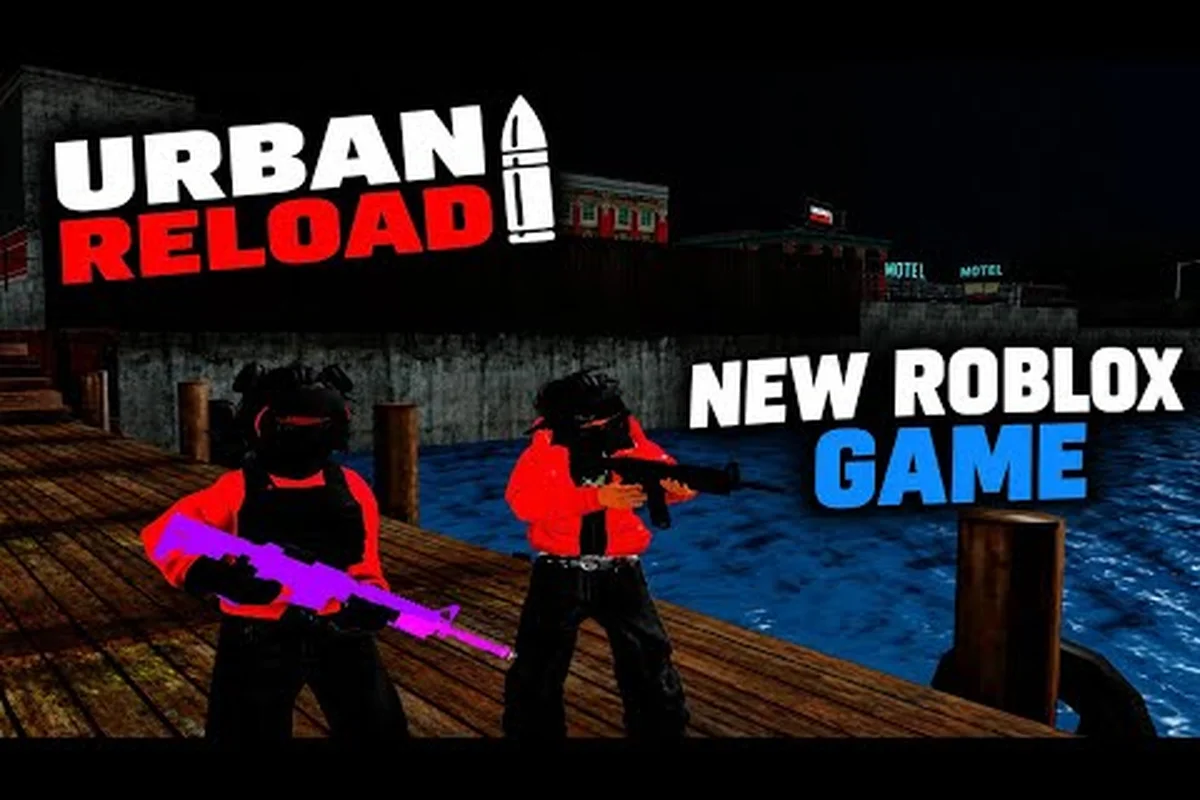
Urban Reload play with friends works best when your crew has a shared plan, not just a shared invite. Forming a squad, choosing a clear tag, and assigning roles can turn chaotic PvP rounds into coordinated wins, especially when every teammate knows when to push, regroup, and collect loot.
What Makes a Squad Session Enjoyable
Urban Reload is built around fast PvP encounters in a city setting. The official Urban Reload on Roblox describes tactical gunfights, cash farming, weapon looting, car customization, and crews, which means good teamwork affects nearly every part of a session. Players who enter alone often move between goals without a shared objective. A prepared crew can cover one another, reduce wasted trips, and recover from a defeat much faster.
The game page showed approximately 4.04 million visits, about 7.9K players online, 11,505 favorites, and a 20-player server cap when checked on October 30, 2026. Those figures are a snapshot rather than permanent values, but they show that the community is large enough for group play to feel active. Your own crew only needs a few dependable players to establish a strong rhythm, so there is no need to recruit a full roster before practicing.
| Group factor | Solo approach | Crew approach | Practical benefit |
|---|---|---|---|
| Objective | React to nearby opponents | Agree on a target before moving | Fewer scattered engagements |
| Loot | Take what is immediately available | Divide collection priorities | More useful equipment per round |
| Combat | Fight independently | Cover teammates and watch flanks | Better control of dangerous areas |
| Recovery | Restart alone after a loss | Regroup at a safe point | Less time spent running empty-handed |
| Communication | No coordination needed | Short, consistent callouts | Faster decisions under pressure |
Set a Shared Objective for Every Round
A crew needs a specific goal before entering a match. Instead of “get as much cash as possible,” choose one primary objective and one secondary objective. The primary could be acquiring cash, securing better weapons, or controlling a route. The secondary could cover the remaining needs without distracting the team.
For example, one player can focus on cash while another searches for a stronger weapon. A third teammate watches for opponents, and the fourth collects ammunition or supplies. These assignments work because they prevent everyone from rushing toward the same target and create a better division of labor. You can compare these responsibilities with the broader Urban Reload complete guide when deciding how new players should learn the core systems.
Establish Three Communication Rules
Keep communication simple enough to use during chaotic encounters. A reliable crew normally needs only three types of callouts: location, direction, and status. A location call identifies where a teammate is moving. A direction call marks a threat, while a status call communicates whether the player is safe, injured, collecting loot, or ready to move.
| Callout | Example meaning | Best time to use it |
|---|---|---|
| Location | “Taking the east street” | While separating from the group |
| Direction | “Opponent behind the garage” | When a teammate cannot see the threat |
| Status | “Reloading, cover me” | During a vulnerable pause |
| Regroup | “Back to the safe lot” | After a successful escape or loss |
Use short phrases rather than long explanations. Your teammates should be able to understand an alert while moving, fighting, or looking for loot. This becomes especially valuable in larger sessions, where communication delays can allow an opponent to approach from an unexpected angle.
Build a Strong Urban Reload Squad Guide for New Crews
A dependable squad is created through preparation rather than a complicated hierarchy. Start with a small roster, assign practical roles, and agree on rules that make every session easier to manage. The official page supports forming crews for team play, while the Squad Labs Roblox group serves as the developer’s official hub for updates and community activity.
Choose Roles by Strength, Not Personality
Roles should reflect what each player does well. A confident close-range fighter may serve as the point player. A more cautious teammate can watch the rear or collect resources while the others engage. Another player may specialize in navigation, while someone else communicates enemy positions.
| Squad role | Main responsibility | Useful skill | Common mistake |
|---|---|---|---|
| Point player | Opens routes and identifies targets | Quick reactions | Charging without backup |
| Support player | Collects cash, ammunition, or supplies | Efficient movement | Ignoring nearby threats |
| Flank watcher | Covers another direction | Situational awareness | Wandering too far away |
| Scout | Finds opponents and safe routes | Map knowledge | Revealing the crew too early |
| Squad caller | Confirms roles and regroup points | Clear communication | Giving too many simultaneous orders |
These roles should remain flexible. If the point player is eliminated, the squad should be prepared to promote the nearest teammate rather than pause the match. The Urban Reload team-up guide can help with crew setup, while your live squad should adapt assignments according to what the current match demands.
Use a Two-Person Core
For Urban Reload play with friends, a two-person core is often more useful than a large but inactive roster. Each core member knows the other player’s movement, can cover the blind side, and can quickly report what is happening. Add two or three extra players later, but preserve the core’s responsibility for deciding when the crew should advance.
A dependable core also reduces pressure on inexperienced players. Instead of reacting to every event independently, a newcomer can follow one established teammate and handle a simple task such as gathering cash or watching a known approach. That structure produces useful behavior without demanding advanced tactical knowledge on the first day.
Build a Consistent Practice Routine
Treat the first few matches as practice rather than an evaluation. Start by learning where teammates meet, which routes are commonly used, and how quickly the server moves between areas. Then select one communication rule and one role to practice. Trying to establish a complete strategy at once usually leads to confused callouts and overlapping objectives.
A simple progression is to learn together, specialize together, and then compete together. During the learning stage, focus on communication. During specialization, identify each player’s strongest contribution. In competitive rounds, use those strengths around a shared objective. Community gameplay such as this Urban Reload guide from ItzVexo can provide examples of broader play patterns, although individual tactics may vary by update and match.
Urban Reload Team Strategies for Winning Group Rounds
A good strategy assigns a purpose to every member without making the match rigid. The crew should have a starting plan, a reaction plan for contact, and a recovery plan after losing a fight. This structure is especially important because defeated players drop their weapons, while defeated opponents may leave loot that can be collected.
Choose a Meeting Point Before Spawning
Pick a meeting point that is recognizable but not blindly predictable. The group should spawn, move together for a short time, and confirm roles. Avoid gathering in the same visible entrance every match because other crews may learn the pattern. A nearby alley, parking area, or alternate city approach can provide flexibility without stranding teammates far apart.
| Strategy | Strength | Best use | Caution |
|---|---|---|---|
| Direct push | Fast and aggressive | Surprise groups | Poor when teammates are far apart |
| Split approach | Covers multiple routes | Finding safer opponents | Can divide the crew too far |
| Group route | Keeps everyone together | Learning and collecting | May surrender first-contact advantage |
| Safe regroup | Restores formation | After a defeat or loot run | Requires clear timing |
| Double sweep | Creates crossfire | Confident experienced squads | Difficult without callouts |
Use a Push, Cover, Collect Cycle
The Push, Cover, Collect cycle gives group play a simple rhythm. The point player and one supporter push toward the next objective. Another teammate covers their rear, while the remaining player collects cash, weapons, ammunition, or other useful items. Once the engagement ends, everyone converges before starting again.
The cycle works because it balances risk with rewards. A crew that only pushes may accumulate kills but lose loot, while a crew that only collects can be caught without support. Rotating responsibilities also prevents the same teammate from taking every dangerous position. The Urban Reload shop guide includes broader farming methods that can be adapted when the squad wants to collect cash efficiently.
Retreat Together After a Loss
Losing a fight does not need to end the crew’s round immediately. The official game page explains that a defeated player drops their weapon, so regrouping may allow a teammate to recover valuable equipment. The response depends on the situation, because immediate rescue is sensible if nearby opponents are likely to finish the crew, while returning to a safe area may be better after a distant defeat.
A useful rule is to separate emergency rescue from routine recovery. If the crew has only one viable weapon or is being pursued from multiple sides, call for immediate reinforcement. Otherwise, fall back, regroup, and re-enter when the crew has a workable loadout. This prevents emotional, unplanned pursuits from scattering the entire team.
Pick Memorable Urban Reload Crew Names and Tags
A crew identity should be short, readable, and relevant to how the group plays. The urban reload crew tag appears alongside the name, so it should communicate the squad’s attitude without becoming difficult to read in chat or on the roster. Clarity matters more than complexity because players need to identify allies quickly during a match.
Build Names Around a Shared Theme
Use a theme that the group will still enjoy after a losing streak. Possible categories include street crews, tactical units, racing teams, urban hunters, and exaggerated comedy squads. The best idea reflects the crew’s actual play style and gives members something recognizable to say in chat.
The following urban reload crew name ideas offer a practical starting point:
| Theme | Crew name example | Suggested crew tag | Fits this style because |
|---|---|---|---|
| Tactical | Night Shift | NS | Brief and easy to recognize |
| Hunting | Redline Hunters | RH | Suggests pressure and pursuit |
| Speed | Midnight Motors | MM | Works for mobile crews |
| Defense | Concrete Kings | CK | Implies a resilient group |
| Street | Northside Kings | NSK | Creates an urban identity |
| Comedy | Taxing Tony | TT | Gives the squad a memorable joke |
| Competitive | Zero Hour | ZH | Communicates urgency |
| Balanced | Northstar Crew | NSC | Feels organized and versatile |
Do not copy a crew name that is already confusingly similar to an established team. Search within the game interface and ask members to confirm the exact spelling before joining. A crew tag such as NSK, RH, or MM should be easy to type quickly, especially if members communicate it during fast decisions.
Match the Tag to the Name
The tag should reinforce the crew name rather than introduce a separate identity. Two-letter tags are highly readable, although the game may impose its own formatting or availability rules. Three-letter tags can distinguish a more specific theme, but they should not look like an accidental keyboard mash.
| Tag style | Example | Advantage | Best paired with |
|---|---|---|---|
| Initials | NSC | Immediate recognition | Multiword formal names |
| Short form | NS | Fast to type | Brief names |
| Number code | 404 | Memorable and modern | Street or digital themes |
| Symbol-based | VLT | Visually distinct | Competitive crews |
| Acronym | NHC | Clear once explained | Tactical names |
For urban reload crew name ideas that emphasize fast communication, test the full combination aloud: name, tag, and a short response. If every member can recognize and say it immediately, the identity is doing its job. If pronunciation or spelling causes confusion, simplify it before adding more members.
Handle Common Squad Problems Without Losing the Crew
Even a capable group can lose momentum through unclear expectations. The solution is to correct small communication failures early instead of blaming individual players after a bad match. Persistent problems should be addressed through specific assignments, rehearsed callouts, or a crew leader who can simplify decisions.
Fix Uneven Contribution
If one player carries every fight while others collect nothing, the squad may be missing tasks rather than effort. Assign specific resources and allow the collector to report what they found. If one teammate consistently performs well in support roles, that person may be better positioned as the flanker or caller.
| Problem | Likely cause | Practical correction |
|---|---|---|
| Everyone targets one item | No priority list | Choose one primary and one secondary pickup |
| Teammates die separately | Excessive separation | Set a maximum distance before regrouping |
| Callouts are ignored | Too many or unclear phrases | Use location, direction, and status only |
| One player controls everything | No shared decision rule | Let the caller confirm a simple plan |
| Loot is ignored after a win | No collection plan | Assign a collector before engaging |
Rotate Leaders Across Sessions
One squad leader can keep plans consistent, but rotating leadership makes the group more resilient. A temporary leader can guide a specific route or handle a difficult recovery, while others learn how decisions are made. This is useful when one player cannot attend regularly or when the roster changes.
The Urban Reload crew activity guide can help distinguish crew roles and structural choices, while live play should determine which responsibilities each member enjoys. A group that rotates tasks usually develops better spatial awareness because every player learns what the team needs during each stage.
Review One Thing After Each Match
Reviewing an entire session can become confusing. Instead, identify one thing that improved and one thing to adjust during the next match. Examples include calling enemy positions earlier, collecting before crossing open areas, or regrouping sooner after a defeat. Small corrections compound into stronger habits over several sessions.
Community footage, including this two-hour Urban Reload gameplay session, can expose common movement patterns. However, community footage should be treated as player experience rather than an official rule set. The official Roblox page remains the better authority for the game’s core features.
Turn a Casual Group Into a Competitive Crew
Urban Reload group play becomes more rewarding when the crew has a shared identity, a simple communication system, and enough flexibility to adapt. The strongest teams do not try to memorize every route or fight perfectly; they react quickly, protect one another, and know what each member contributes to the next objective.
Start with the Push, Cover, Collect cycle, because it provides a useful structure without demanding advanced tactics. Pair it with location, direction, and status callouts, then use a clear crew tag that everyone can recognize. For additional mechanics and progression context, review the Urban Reload peak-player overview and the official game page for current activity and feature information.
Frequently Asked Questions
How many players should join an Urban Reload crew?
A crew of three or four is ideal for beginners because everyone receives a clear role while the squad remains easy to coordinate. You can invite more players later, but a smaller core often communicates and regroups more effectively. Two teammates are also enough to test cover-and-support tactics, while larger crews should divide into smaller pairs or sub-groups during fights.
What is the best crew tag for Urban Reload?
The best crew tag is short, readable, and closely connected to your crew name. Two or three letters, such as NS or NSC, work well when they are easy to type and recognize. Avoid overly detailed tags because names and tags can become difficult to distinguish during fast chat. Confirm the exact format and availability inside the game before committing.
How should friends split up in Urban Reload?
Friends should divide into pushing, covering, and collecting roles instead of pursuing the same target simultaneously. Keep the point player and support player close enough to assist each other, while the collector gathers resources without wandering too far. Regroup after the engagement and swap assignments when necessary so one teammate does not carry every dangerous task.
Do Urban Reload crews need a formal leader?
No, but every successful crew benefits from one clear decision-maker during a match. A leader can confirm the objective, watch for split positioning, and call the regroup. Rotate this responsibility across sessions if you want members to develop stronger tactical skills and remain useful when the usual leader is absent.
What is the easiest way to improve as a crew?
Practice one communication habit at a time and review it after each match. Early goals should include giving location callouts, protecting the collector, and regrouping after a defeat. Consistent review is more useful than making large strategic changes every session, because small corrections become easier to recognize and repeat during fast encounters.