
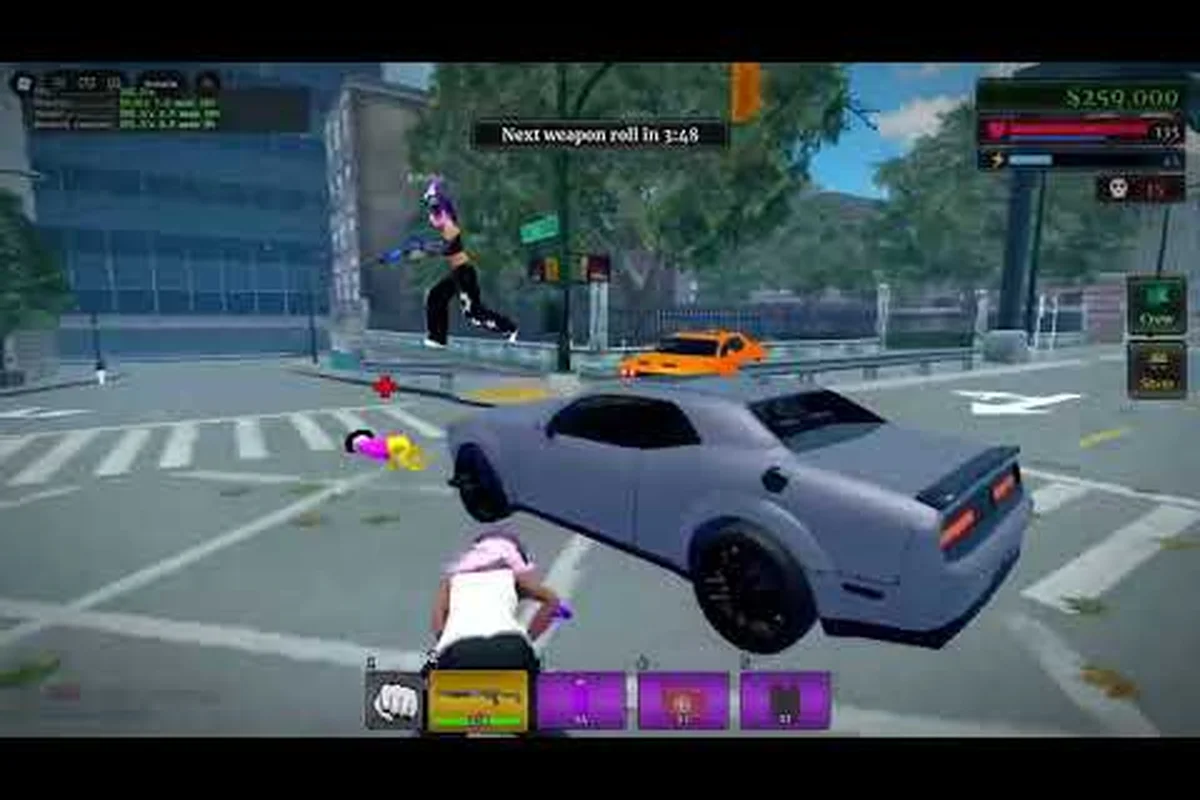
Urban Reload nerfs matter because a reduced magazine size, slower reload speed, or longer equip time can alter the practical value of a weapon far more than its headline stats suggest. For example, if a shotgun loses two shells per magazine, damage output may remain unchanged while players must reserve more time for reloading. Tracking the urban reload roadmap, urban reload buffs, and urban reload hotfix notes helps explain these shifts; records of urban reload downtime and urban reload beta changes also distinguish temporary tuning issues from deliberate balance adjustments, preventing match plans based on outdated weapon advice.
Urban Reload Nerfs and Buffs: What Changed
Balance updates in Urban Reload can reshape a match before a player finishes loading in. The important distinction is between a deliberate balance adjustment and a quick correction made to restore the intended experience. A weapon may receive a damage reduction, while another may gain faster handling or improved survivability through a separate buff.
The supplied update data does not identify official numerical values for individual weapons, so treating any specific damage figure as confirmed would be misleading. Instead, players should distinguish the confirmed adjustment, the affected equipment, and the resulting play pattern. That method works even when the patch note is brief.
| Change type | What it usually indicates | What players should verify | Practical response |
|---|---|---|---|
| Nerf | A weapon or mechanic became less effective | Damage, handling, recoil, or ability strength | Compare the new time to kill and ease of use |
| Buff | A weapon or mechanic became stronger | The exact stat and whether the change stacks | Revisit loadout priority and map positioning |
| Hotfix | A problem was corrected quickly | Whether the fix changes normal match balance | Check version notes before changing your entire build |
| Beta adjustment | Balance was tested before a wider release | Test branch behavior and known issues | Treat early data as provisional |
Reading the balance signal
A nerf is not automatically a downgrade for every player. A weapon that becomes less powerful in raw damage can remain valuable if its handling, mobility, or reload speed is unchanged. Conversely, a small buff may have a greater effect if it improves the bottleneck that stops a weapon from competing at higher difficulty.
The strongest evidence comes from the current patch or hotfix notes and in-match testing. Community reports can identify trends, but they should not replace official confirmation of a numerical value. Because the available material includes two beta videos but no official web result, this review separates confirmed context from interpretation.
The video Im Trying the Urban Reload Beta by SKI provides a 7-minute-55-second look at beta play, while URBAN RELOAD BETA DAY 01 l BINSKI by ShenZhenFPS offers a shorter 1-minute-34-second snapshot. Their short lengths make them useful for observing particular interactions, but not for establishing the full balance framework.
Check the Patch Before Rebuilding
Before rebuilding a loadout after Urban Reload nerfs, confirm that you are comparing the same version, mode, and difficulty. A change observed in the Urban Reload beta may not carry over to the live build, and a hotfix may alter only one part of a larger balance goal.
Build a version-pinned test matrix for each Urban Reload weapon, logging the branch or hotfix, mode, difficulty, magazine capacity, reload duration, damage per shot, and rate of fire. For example, if the urban reload nerfs reduce a weapon’s magazine by 20 percent, compare the number of targets it can defeat before the next reload rather than only its time-to-kill. This also helps distinguish an intentional Urban Reload balance adjustment from a temporary urban reload downtime issue or an isolated beta change.
-
Record the baseline: Note the weapon, rate of fire, handling, and time required to defeat a target.
-
Read the exact wording: Identify whether the developer changed damage, capacity, movement, reload speed, or another attribute.
-
Reproduce the test: Repeat the same range, distance, and firing pattern used before the adjustment.
-
Compare the result: Decide whether the adjustment changed raw power, consistency, or merely the feel of the weapon.
-
Wait for confirmation: Keep provisional builds until another patch or reliable player reports support the change.
This controlled comparison makes it easier to distinguish an actual Urban Reload balance shift from apparent regressions caused by unfamiliar target profiles, map conditions, or a different firing routine. For example, if a beta patch reduces a weapon’s magazine capacity by 20 percent, tracking targets defeated before the next reload exposes the practical effect that a time-to-kill comparison may hide. Keep the range, distance, burst timing, and target type fixed so changes in reload duration or rate of fire do not contaminate the results, and label every result by build number, branch, or hotfix date for reliable comparison.
Urban Reload Hotfix Changes and Their Impact
Hotfixes deserve attention because they can alter the match experience before broader roadmap work arrives. An Urban Reload hotfix may correct crashes, restore intended behavior, or address a balance issue that became clear during early access. The key question is whether the change affects normal play or only a narrow technical case.
Because no official hotfix text is included in the supplied source material, this section does not invent a patch number, affected weapon, or percentage change. The appropriate interpretation framework is based on the available beta footage and the way balance corrections usually interact with live play.
| Hotfix signal | Likely player-facing result | Confidence from current source set | Best verification step |
|---|---|---|---|
| Crash or stability correction | Fewer interruptions and more complete matches | Medium | Reproduce the earlier failure condition |
| Weapon handling correction | A weapon may feel faster, slower, or more controllable | Low to medium | Compare identical firing sequences |
| Ability or utility adjustment | Team value can rise or fall independently of raw damage | Low | Review the exact patch wording |
| Server correction | Match availability and session behavior may improve | Medium | Check official service announcements |
| Economy adjustment | Ammo, resources, or purchase timing can change | Low | Track starting and mid-match resources |
Why hotfixes can feel larger than routine buffs
A small stat adjustment has little effect when a weapon is weak for unrelated reasons. By contrast, a hotfix that restores intended movement, eliminates input delay, or corrects a broken economy can reshape every engagement. The apparent magnitude of the update therefore depends on the strength of the mechanic that was corrected.
For example, reducing the effectiveness of an overpowered weapon may improve competition only if the weapon remains useful and the change does not leave players with a weak alternative. A functional correction can have the opposite effect if it restores access to a strong route that was accidentally unavailable.
Use three layers of evidence when reviewing an Urban Reload hotfix: identify the exact balance target, compare its performance before and after the patch, and confirm that the nerf changes the intended match experience rather than merely replacing one imbalance with another. For example, a weapon’s damage reduction matters differently if the accompanying improvement to movement speed or reload timing restores its practical viability; the relevant metric is the weapon’s effective performance in real engagements, not a single tooltip value.
-
Official scope: Read which mode, weapon, or system appears in the note.
-
Reproduction: Test the same behavior on the updated version.
-
Result: Measure whether the correction creates the intended experience.
Players interested in technical corrections can also review the site's overview of Urban Reload server maintenance and bug fixes. That page is particularly relevant when downtime, login issues, or temporary progression problems accompany a balance patch.
Distinguishing planned tuning from emergency repair
Planned tuning usually follows a broader balance objective and may appear alongside a roadmap update. Emergency repair addresses an immediate problem and often contains fewer explanatory details. This distinction matters because a weapon may be changed temporarily to reduce frustration, while a later hotfix could partly restore it.
Community beta footage can help identify what players encountered, although a creator’s one-match experience does not reveal the developer’s final intent. The two supplied videos were produced by different creators, which offers some cross-player perspective, but neither is long enough to cover every weapon or game mode.
| Evidence source | Strength | Limitation | Best use |
|---|---|---|---|
| Official patch notes | Highest | Not included in the supplied source set | Confirm exact values and scope |
| Current live testing | High for behavior | Requires controlled comparisons | Measure practical impact |
| Multiple player reports | Medium | Can mix versions and modes | Detect emerging patterns |
| Short beta video | Limited | Limited sample and duration | Observe one interaction or setting |
| AI-generated summary | Low | Cannot establish game facts | Generate questions, never confirm values |
Urban Reload Beta Balance Testing
The Urban Reload beta is the most useful environment for observing early balance ideas before they stabilize. It can reveal which weapons dominate, whether a newly adjusted mechanic creates awkward match rhythms, and how much skill still influences the outcome. The key is to separate beta feedback from confirmed live behavior.
Player experience in the available footage shows active testing during the beta, but the supplied data does not include a score breakdown, weapon matrix, or developer statement. As a result, the most defensible approach is to outline a repeatable evaluation method rather than declare a definitive weapon ranking.
Build a controlled beta test
Choose one variable at a time, such as range, recoil control, movement, reload timing, or target priority. If several factors change between rounds, it becomes difficult to determine which adjustment caused the result. This matters especially during a beta because occasional imbalance may exist only in particular conditions.
| Test phase | Focus | Data to record | Why it matters |
|---|---|---|---|
| Baseline | Unchanged favorite weapon | Damage feel, accuracy, movement | Establishes a personal reference |
| Adjust test | The newly nerfed weapon | Same range and firing pattern | Reveals the direct adjustment |
| Buff test | The newly strengthened option | Acquisition speed and sustained use | Measures real benefit |
| Match test | Multiple opponents | Consistency across encounters | Separates test conditions from match strength |
| Team test | Cooperative scenarios | Resource pressure and utility | Captures non-damage value |
Community data should be treated as a set of observations rather than a final verdict. One player may favor a weapon that rewards accuracy, while another values rapid movement. Comparing those experiences makes the beta discussion more useful because it identifies which play styles each change supports.
What to watch beyond damage
Raw damage is only one component of balance. Movement can determine whether a player reaches cover before being exposed, while reload speed affects the number of interruptions in a sustained fight. Accuracy under pressure may be more important than a small difference in theoretical output.
The most useful beta observations answer a specific question: did the Urban Reload change improve real-world performance without breaking weapon identity? Track reload duration, magazine capacity, damage per shot, and time-to-kill across the same encounters, then compare the results with adjacent builds. A slower reload may create better cover discipline, but a hotfix that removes too much magazine capacity can also extend downtime between bursts and make an otherwise strong Urban Reload option unusable in sustained fights.
-
Can the weapon still compete? Compare it with the current alternatives rather than an imagined perfect option.
-
Does the weapon still have a purpose? Look for a reliable situation in which its strengths matter.
-
Did the change create a new dominant choice? Watch whether one option begins appearing in every successful loadout.
-
Did the change reduce meaningful choices? A skill ceiling may be healthy even when an average option becomes less dominant.
Those questions help evaluate both Urban Reload buffs and nerfs without reducing balance to a single tier list. Players who are still building their first route can use the Urban Reload beginner guide to establish basic settings and mechanics before testing updated equipment.
Urban Reload Roadmap Signals and Downtime Context
A balance article is more useful when it connects immediate changes to the larger development cycle. The Urban Reload roadmap indicates where the project intends to go, while Urban Reload downtime reveals when the service may be unavailable during implementation. Neither should be treated as a guaranteed balance schedule unless the developer explicitly confirms the details.
Because no official roadmap dates or maintenance schedule were supplied, this article avoids presenting speculative windows as commitments. For example, an Urban Reload roadmap entry may signal an intended nerf or buff, while an Urban Reload beta adjustment can show that the change is still being tested; neither establishes the final live values. Likewise, an Urban Reload hotfix or post-maintenance patch may resolve an issue or ship a completed balance change without revealing the broader design direction. Urban Reload downtime should therefore be read as a possible implementation window, not proof that a specific nerf or buff will arrive during that period.
| Development signal | What it tells players | What it does not confirm | Sensible player action |
|---|---|---|---|
| Roadmap item | A feature or system is being considered or developed | Exact release timing | Avoid building a plan around a vague date |
| Beta adjustment | A balance idea is being tested | Final live values | Record feedback while the branch is active |
| Hotfix | An immediate issue is being corrected | Long-term design direction | Verify whether the correction was temporary |
| Maintenance notice | A service interruption is planned | The final balance patch | Save progress and check the next announcement |
| Post-maintenance patch | A build may include completed changes | Whether every listed feature launched | Read the full version history |
Why downtime belongs in a balance discussion
Downtime can make it harder to compare results. A player who tests before maintenance may use one balance state, while another tests the same weapon after several fixes and interprets the difference as a single adjustment. Recording the build or patch date prevents confusion and makes later comparison more accurate.
Urban Reload downtime also matters strategically if progression, matchmaking, or marketplace access is affected. Even a temporary inability to enter a match can interrupt testing, and players should not repeatedly restart or stress a service when official maintenance is underway.
A useful maintenance routine includes checking the live Urban Reload version notice, noting the build or patch date, and recording weapon performance under one controlled setup before and after downtime. For example, if a primary was testing recoil on a specific training map, repeat that same weapon, range, and burst count after maintenance; otherwise, a shift caused by a hotfix could be mistaken for the intended Urban Reload nerf or buff.
-
Save before the interruption: Finish active progression and avoid risky operations when the notice begins.
-
Confirm the return state: Review which version number or announcement appears after the service returns.
-
Repeat one controlled test: Recreate the same scenario used before maintenance rather than changing weapons and locations simultaneously.
-
Mark the result: Note the date and any patch information associated with the observation.
For a broader view of scheduled service work and related notices, check Urban Reload server maintenance details. Cross-reference each downtime window with the current Urban Reload version notice: an outage may preserve the pre-patch balance state, while a hotfix deployed during maintenance can alter recoil, damage, or weapon handling before players reconnect. For example, if a 30-round recoil test was recorded before the interruption, rerun it after the same build and training map are restored; otherwise, an Urban Reload hotfix could be mistaken for the intended nerf or buff.
Reading roadmap promises cautiously
Roadmap language may indicate different levels of commitment. A feature shown as in development is more concrete than a concept described as a possibility, but both can change. The same caution applies to balance goals: a stated desire to improve weapon variety does not tell you which weapons will receive the first buff or nerf.
Players should look for the specific mechanic behind each roadmap promise. If the objective is to reduce downtime between matches, the milestone might involve backend work rather than combat tuning. If the objective is to improve new-player retention, it could affect tutorial pacing, progression, or match rewards.
| Roadmap wording | Practical interpretation | Confidence level |
|---|---|---|
| Considering | Early concept; details may change | Low |
| In development | Active work, but timing remains uncertain | Medium |
| Beta testing | Limited audience and unstable values | Medium |
| Planned for an update | More concrete scope without a guaranteed date | Medium to high |
| Live now | Confirmed in the current version | High |
Adjusting Your Loadout After Urban Reload Buffs
Balance updates matter most when they change your routine. If a weapon receives an Urban Reload nerf, do not immediately abandon it; reproduce its former role and determine whether the adjustment changes its competitive value. If an item receives one of the Urban Reload buffs, compare its new performance with current alternatives rather than assuming it has become mandatory.
The practical goal is not to use whatever appears strongest on paper. It is to maintain a loadout that performs reliably under the map conditions and opponent behavior you encounter. This approach is especially useful when comparing a current live build with footage captured during the Urban Reload beta.
Adjust in controlled stages
Use a three-stage process: confirm the change, rebuild one part of the loadout, and then test the complete setup. This reduces the temptation to replace several weapons after a single patch and leaves enough evidence to explain any improvement.
| Stage | Action | Keep unchanged | Success signal |
|---|---|---|---|
| Confirm | Read the exact note and reproduce the affected behavior | Range, mode, and target | You can identify the new stat or behavior |
| Rebuild | Change one weapon or one play pattern | Other equipment and route | The new setup solves a specific weakness |
| Validate | Test across several ordinary encounters | Match count and loadout | Consistent results without relying on outliers |
Avoid judging a new build from a single exceptional match. A weapon may benefit from an easy target, favorable terrain, or an opponent who makes mistakes. Several ordinary encounters provide a more reliable indication of whether the adjusted loadout has genuine value.
Choose a role before choosing the item
A useful loadout has a clear purpose, such as reliable close-range damage, controlled long-range pressure, or movement-based survival. When a weapon changes, ask whether its role became stronger, weaker, or simply more specialized. A specialized option can still be excellent even when it is not the safest general choice.
The Urban Reload daily guide can help establish a repeatable routine for reviewing missions, rewards, and loadout priorities. Combining that routine with version notes prevents a balance change from being overlooked while also avoiding unnecessary rebuilding after every minor correction.
Match adjustments to your risk level
Players who prefer steady results should prioritize consistency, reload timing, and the ability to perform from common ranges. Players who enjoy risk can test a weapon whose power depends on accuracy or positioning, but they should still verify that the tradeoff remains meaningful after a nerf.
Community reports are useful for finding weapons that feel inconsistent. However, a report based on one version may describe a hotfix that has already been corrected. Always compare the date of the report with the current patch before changing your strategy.
Choose the option that gives you the clearest basis for comparison: a small Urban Reload damage adjustment, a Urban Reload reload-speed reduction, or a Urban Reload ammo-capacity nerf. Check whether the hotfix changed the listed values, reload animation, or magazine reserve; if the roadmap still describes the old balance, treat the current live-build behavior as the safer reference before committing to a weapon.
-
Verified change: The exact adjustment confirmed by the current patch.
-
Personal performance: Your measured result in controlled scenarios.
-
Match value: The role the weapon or mechanic contributes when normal competition begins.
Treat the Urban Reload roadmap as an intent signal, not a promise: it may still show the pre-hotfix damage, reload-speed, or ammo-capacity values. Compare that entry with the current patch notes and the live-build behavior, especially during urban reload downtime, before rebuilding your loadout around a supposedly buffed or nerfed weapon. If a Urban Reload hotfix changed the animation, magazine reserve, or listed damage, the revised live values should override an outdated roadmap; otherwise, the comparison remains a useful baseline for deciding whether the adjustment improves match value.
Frequently Asked Questions
Did Urban Reload confirm a specific weapon nerf?
The available source set does not include official numerical patch notes, so it does not support naming a specific weapon adjustment with certainty. Players should verify the current patch and hotfix announcements, then compare the weapon’s behavior on the live build. Community videos can demonstrate impressions, but they cannot replace the developer’s exact values or intended scope.
How can I tell whether an Urban Reload buff is actually stronger?
Compare the buffed item with your previous baseline under the same conditions: mode, distance, target type, firing pattern, and loadout. Record handling, accuracy, reload time, and consistency rather than judging from one match. A buff has meaningful value when it improves a bottleneck or makes a previously reliable role stronger across several ordinary encounters.
Does the Urban Reload beta always reflect live balance changes?
No. Beta values can change before release, and a beta adjustment may be revised, replaced, or postponed during later testing. The available SKI and ShenZhenFPS videos document beta experiences, but they do not establish final live numbers. Treat beta findings as useful evidence about the direction of balance while confirming every change through current official information.
How long should Urban Reload downtime interrupt my testing routine?
Stop testing once official maintenance begins and avoid repeated launch attempts because they add no useful data. Use the interruption to save progress, review the patch history, and prepare a controlled test plan. After service returns, confirm the current version before repeating the same scenario so downtime is not mistaken for a balance adjustment.
Where should I look for the latest Urban Reload roadmap update?
Start with official project announcements and version notes, then use community reports to understand player reactions and uncover issues that deserve testing. A roadmap entry should be treated as a planning signal rather than a promise unless it includes a confirmed update window. If official details remain unavailable, avoid assuming that a listed feature has already reached the live build.
The clearest takeaway is that Urban Reload nerfs and buffs should be evaluated through verified patch language, controlled testing, and current match needs. Hotfixes may correct immediate problems, beta footage reveals early balance behavior, and the roadmap provides direction without guaranteeing final values. By separating confirmed changes from player impressions, players can respond to every update without overreacting to temporary imbalances or overlooking useful improvements.